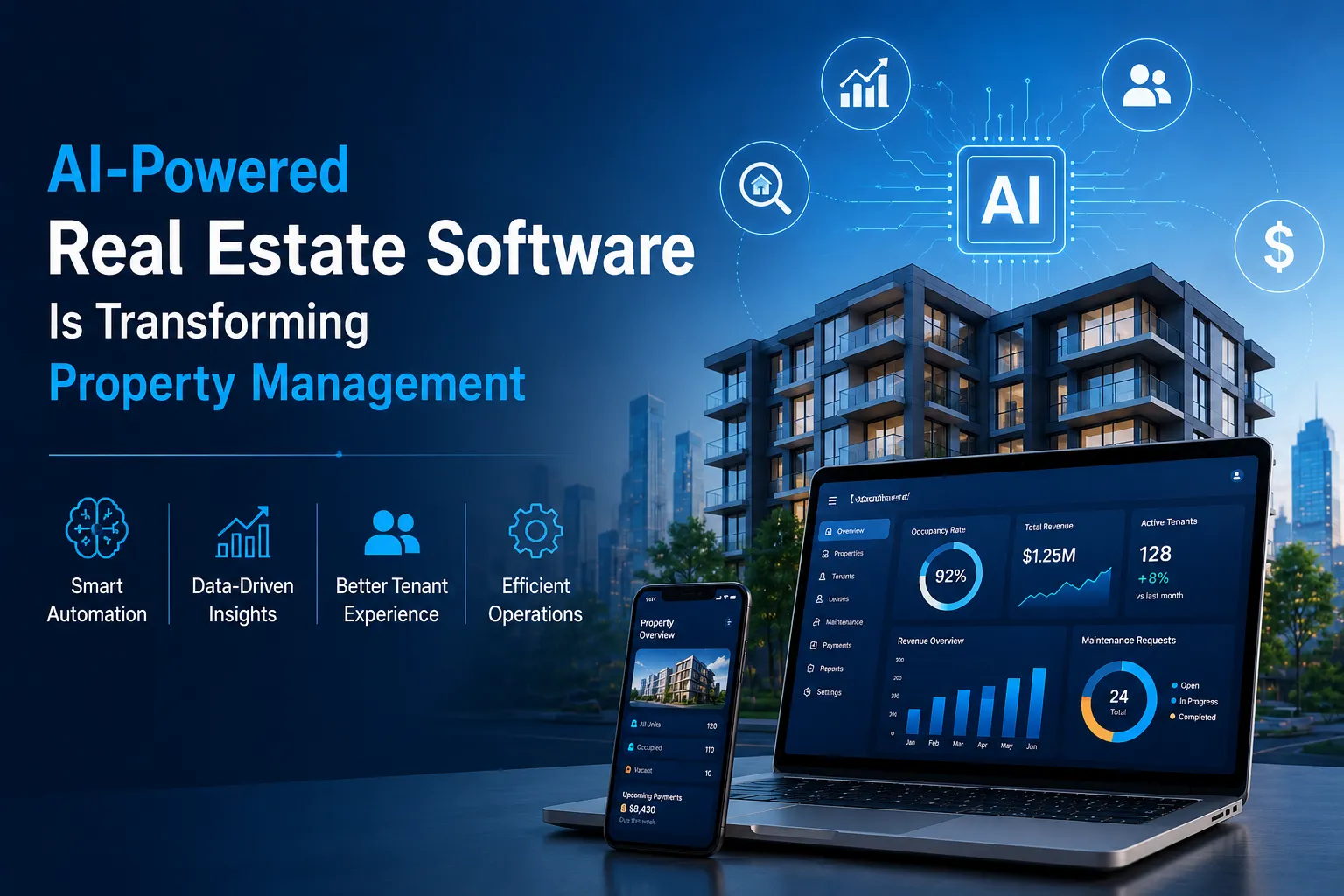
Property management has never been a simple business. Managers juggle maintenance requests, lease renewals, tenant communication, compliance, rent collection, inspections, and financial reporting—often across multiple properties. As portfolios grow, manual processes become increasingly difficult to manage. AI-Powered Real Estate Software is helping property businesses overcome these challenges by streamlining operations and improving efficiency.
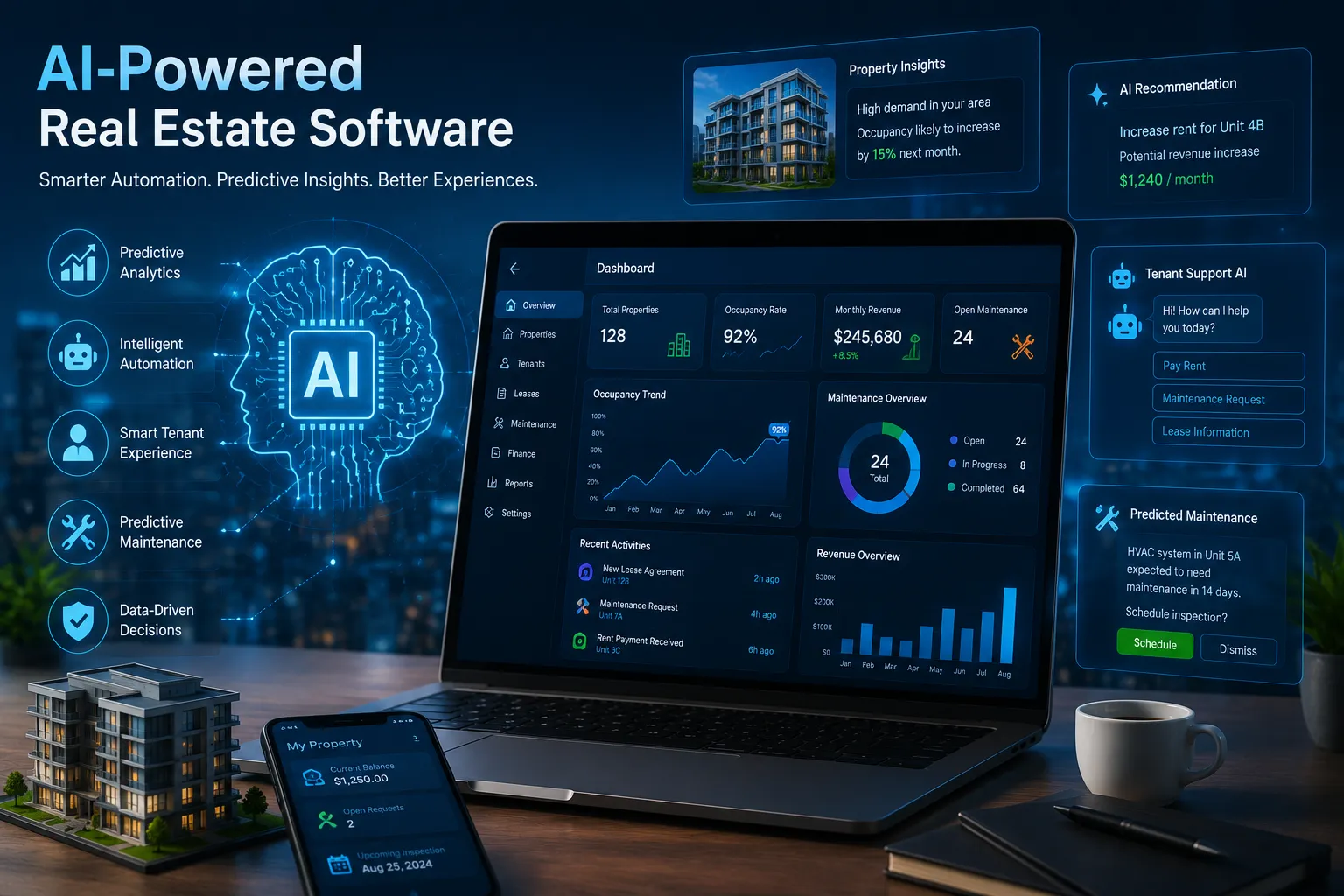
Instead of replacing property managers, AI-Powered Real Estate Software enables them to make faster decisions, automate repetitive tasks, and deliver better experiences for both property owners and tenants. Artificial intelligence is no longer a small-scale experiment in real estate. Predictive analytics, intelligent automation, and tenant-centric features have become an essential part of modern property management, helping businesses improve productivity and make more informed decisions.
From Reactive Management to Predictive Operations

Traditional property management software records information. AI goes a step further by interpreting that information and recommending actions before problems become expensive.
For example, modern platforms can-
- Predict maintenance needs using historical equipment data
- Identify late-payment patterns before rent becomes overdue
- Prioritize maintenance requests automatically
- Forecast occupancy and vacancy trends
- Detect unusual operating expenses
Rather than responding to problems once they have occurred, property managers can identify risks in advance and thus reduce not only costs but also disturbances for tenants.
Where AI Delivers the Greatest Impact
The strongest value of AI comes from managing repetitive, data-heavy tasks while enabling property teams to concentrate on relationships and strategic decisions.
| Traditional Workflow | AI-Enabled Workflow |
| Manual maintenance scheduling | Predictive maintenance recommendations |
| Responding to every tenant inquiry individually | AI-assisted tenant support available 24/7 |
| Reviewing spreadsheets for trends | Real-time operational insights & forecasts |
| Fixed inspection schedules | Risk-based inspections using property data |
| Manual reporting | Automated dashboards & performance summaries |
This transformation allows property managers to spend less time on administration and more time improving tenant satisfaction.
Smarter Tenant Experiences Are Becoming the Standard
Tenant expectations have changed significantly over the past few years.
Now residents want fast responses, digital communication, online maintenance tracking and self-service options. AI-powered virtual assistants can answer frequently asked questions, schedule property appointments, provide lease information and route maintenance requests around the clock.
The result is not just faster communication – it is a more consistent tenant experience that reduces pressure on management teams while improving response times. Many commercial property managers also report that AI-supported communication is becoming a key part of modern property operations.
Why Data Is Becoming the Most Valuable Asset
Every property generates thousands of data points each year, yet much of that information traditionally remains unused.
Modern real estate IT solutions combine AI with operational data to uncover patterns that would be difficult to identify manually.
These insights help businesses-
- Optimize rental pricing
- Improve budgeting accuracy
- Reduce maintenance costs
- Monitor building performance
- Support long-term investment decisions
As AI models continue learning from operational data, recommendations become more accurate over time, enabling property managers to make better-informed decisions with greater confidence.
The Role of Real Estate Software Development
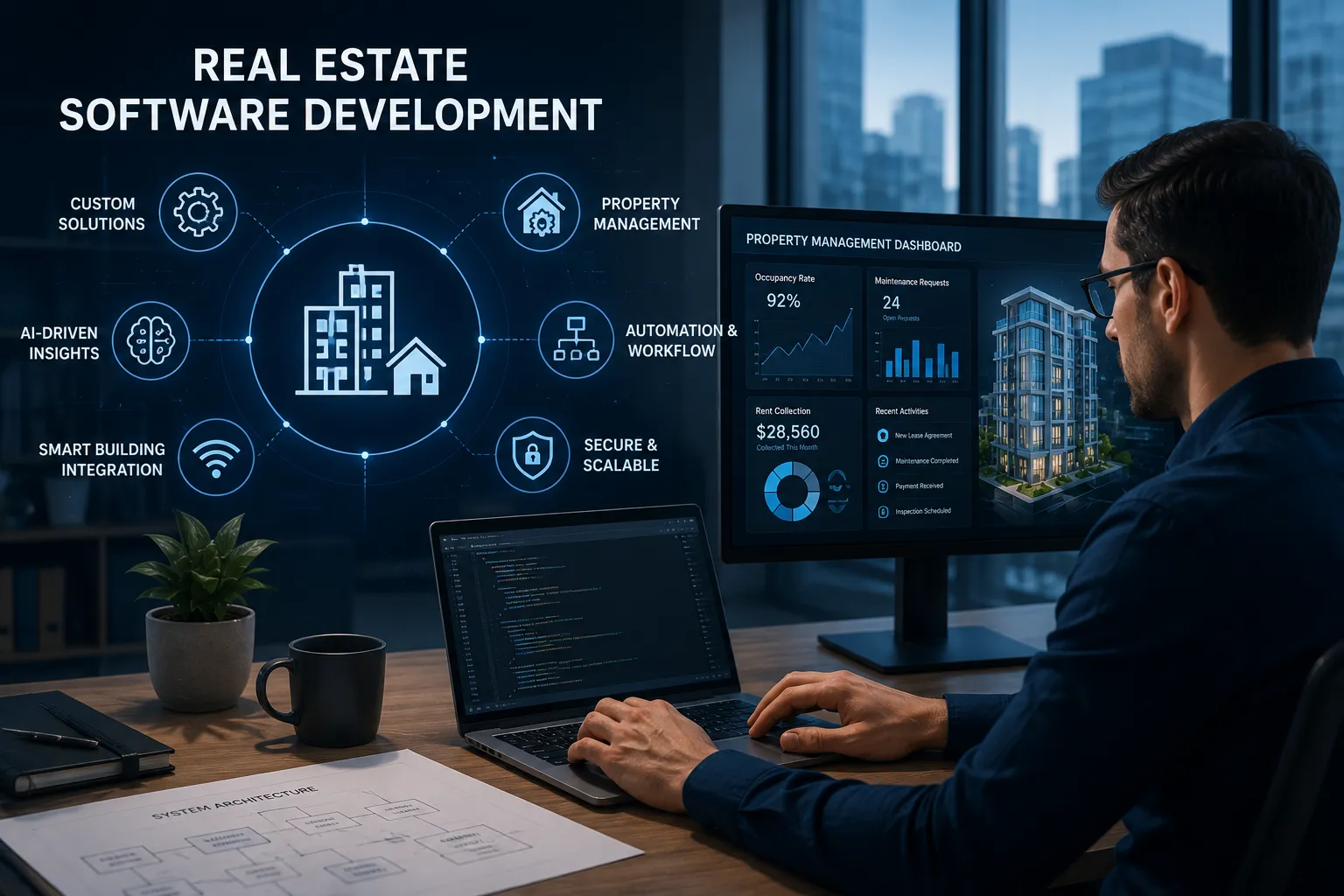
The way every property business works is different. A residential portfolio has different needs than commercial buildings, mixed-use developments or student housing.
That is why many organizations are investing in customized real estate software development rather than relying entirely on generic platforms.
Modern solutions increasingly integrate-
- AI-driven reporting
- IoT-enabled predictive maintenance
- Digital lease management
- Financial automation
- Smart building monitoring
- Document intelligence for contracts and compliance
The purpose is to develop a connected ecosystem where information flows across departments instead of remaining isolated in separate systems.
Future Directions
AI is evolving from an optional function to a fundamental part of today’s real estate operations. The sector is gaining momentum toward smart automation, predictive maintenance, and informed decision-making through greater efficiency across the entire real estate lifecycle.
Final Thoughts
Technology is not about replacing experienced property management professionals. Instead, it is about equipping them with smarter tools to manage growing portfolios more accurately, efficiently, and confidently.
Businesses that invest in AI-Powered Real Estate Software today are preparing their operations for long-term success by improving automation, enhancing tenant experiences, and making better data-driven decisions. Combined with customized real estate software development and scalable real estate IT solutions, AI-Powered Real Estate Software enables property managers to move beyond routine administration and focus on delivering greater value for property owners and tenants while staying competitive in an increasingly digital real estate market.