Introduction
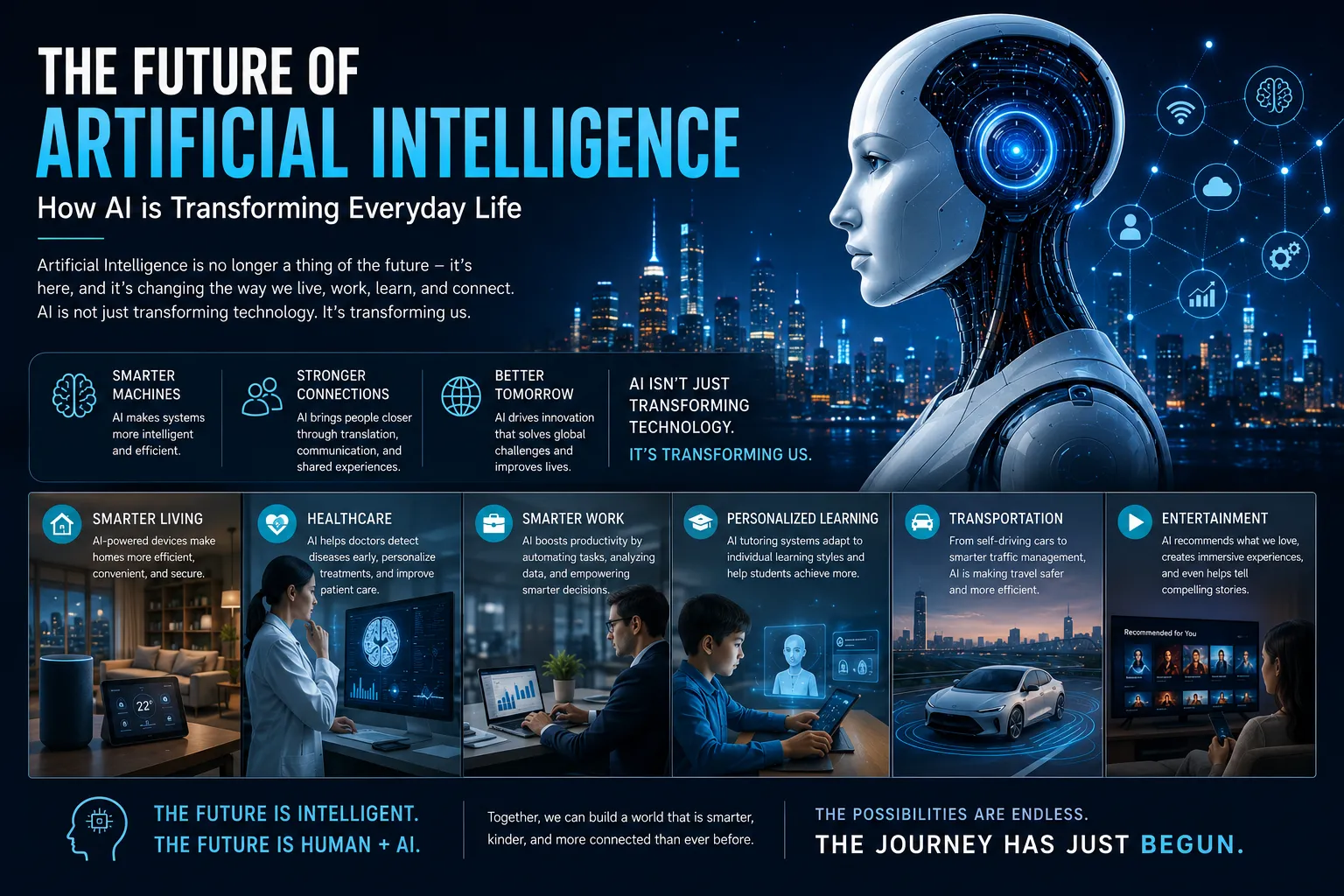
The Future of Artificial Intelligence is rapidly reshaping the way we live, work, and communicate. Artificial Intelligence (AI) is no longer a futuristic concept—it has become an essential part of our daily lives. From voice assistants and personalized recommendations to self-driving vehicles and healthcare innovations, AI is transforming industries and improving everyday experiences. As technology continues to evolve, the Future of Artificial Intelligence promises smarter solutions, greater efficiency, and exciting opportunities for both businesses and individuals. In this article, we’ll explore how AI is transforming everyday life and what the future holds.
1. AI is Revolutionizing Communication
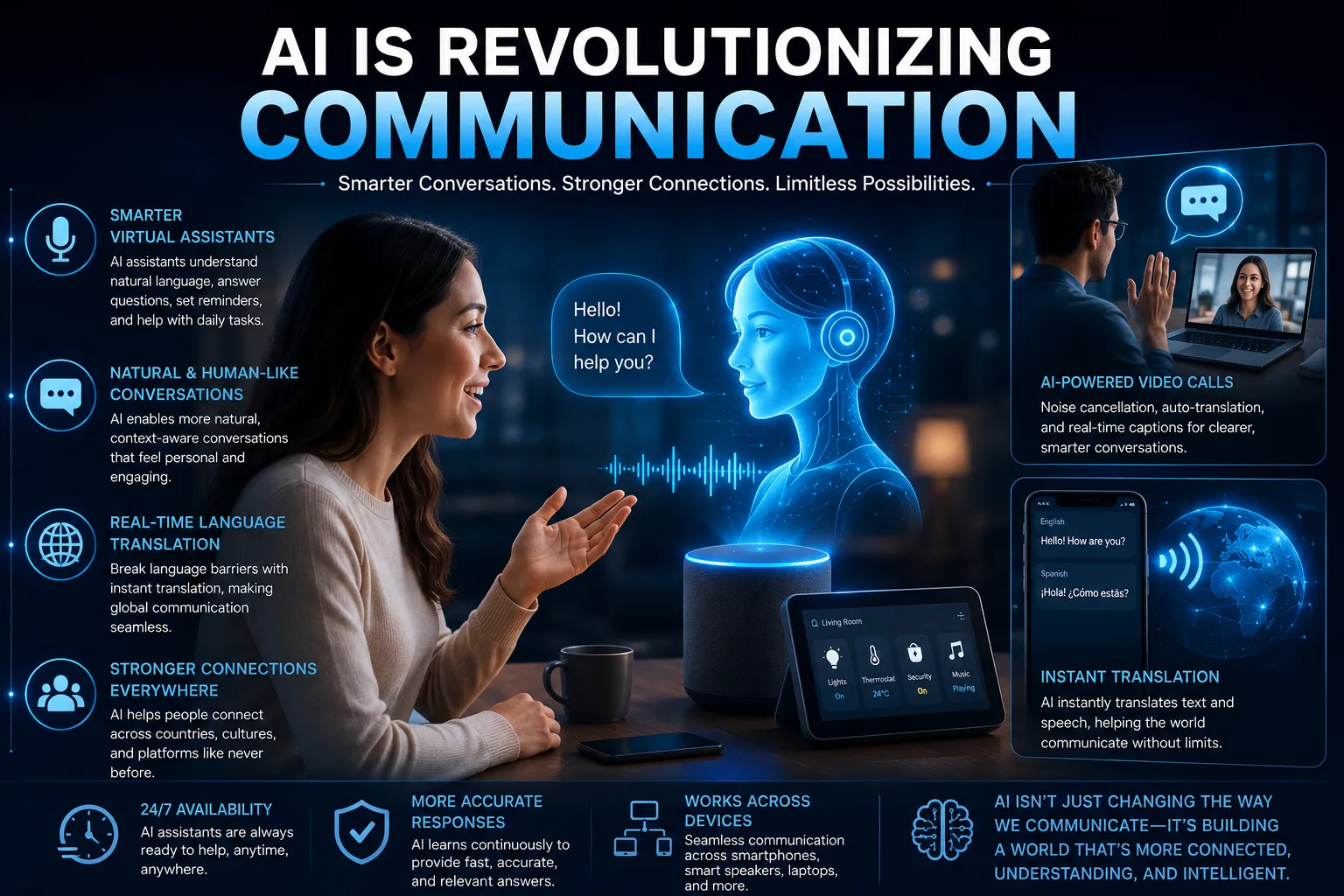
One of the biggest examples of the Future of Artificial Intelligence is how it is revolutionizing communication. AI-powered technologies make conversations faster, smarter, and more accessible by breaking language barriers and improving digital interactions.
1. Smarter Virtual Assistants
AI-powered virtual assistants like Siri, Google Assistant, and Alexa help users set reminders, answer questions, control smart devices, and complete everyday tasks using simple voice commands. As the Future of Artificial Intelligence continues to evolve, virtual assistants are becoming more personalized, accurate, and capable of handling increasingly complex tasks.
2. Real-Time Language Translation
AI-powered translation tools enable people from different countries to communicate instantly by translating text and speech in real time. These innovations make global communication easier for businesses, travelers, students, and remote teams.
2. AI is Transforming Healthcare
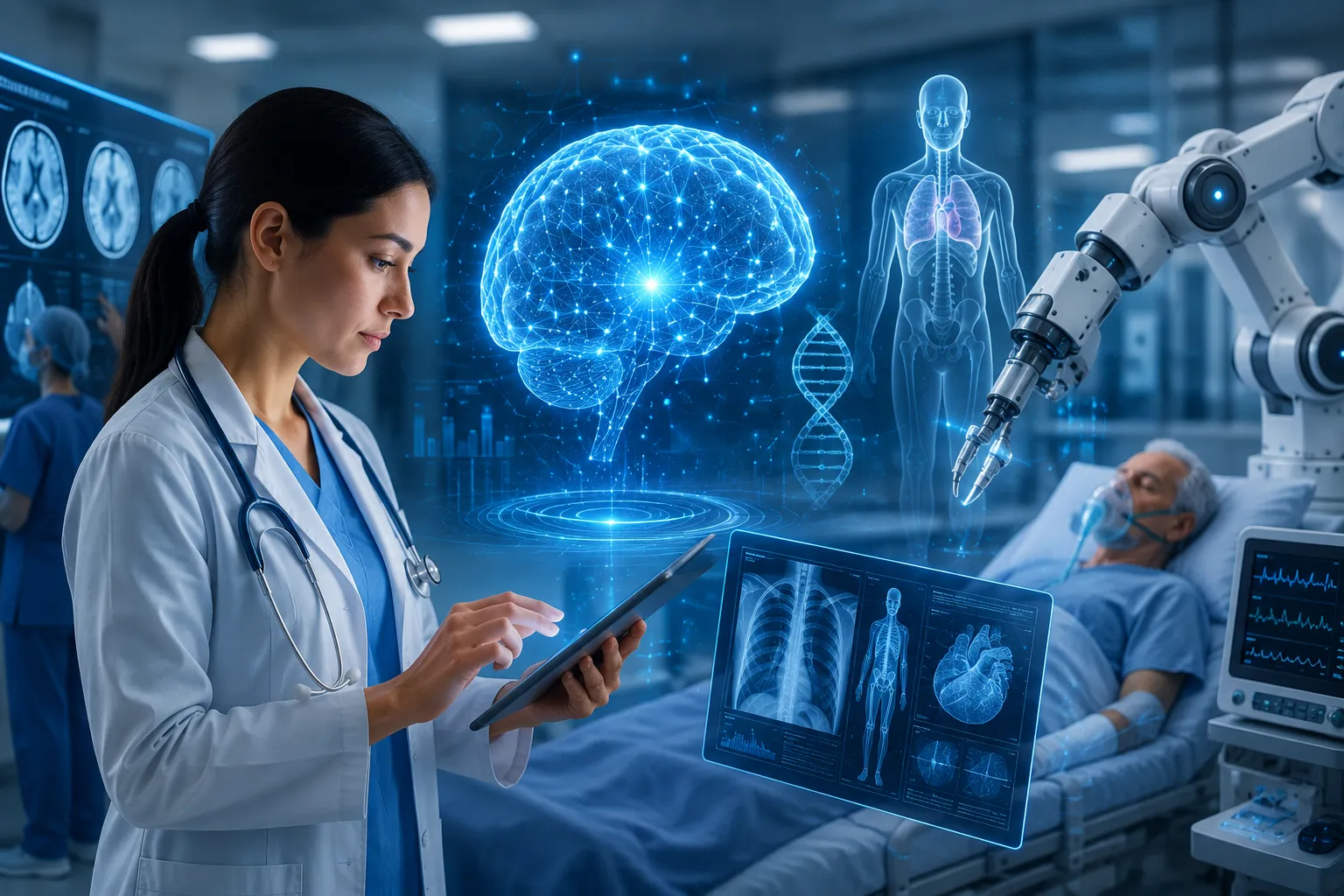
Healthcare is one of the industries benefiting the most from the Future of Artificial Intelligence. AI helps medical professionals deliver faster diagnoses, personalized treatments, and improved patient care.
1. Faster and More Accurate Diagnoses
AI analyzes medical images, laboratory results, and patient records to detect diseases such as cancer, diabetes, and heart conditions with greater speed and accuracy. This enables doctors to identify health issues earlier and improve treatment outcomes.
2. Personalized Patient Care
AI-powered healthcare systems create customized treatment plans, monitor patients remotely, and provide predictive insights that help doctors deliver better long-term care while improving the overall patient experience.
3. AI is Changing Education and Learning
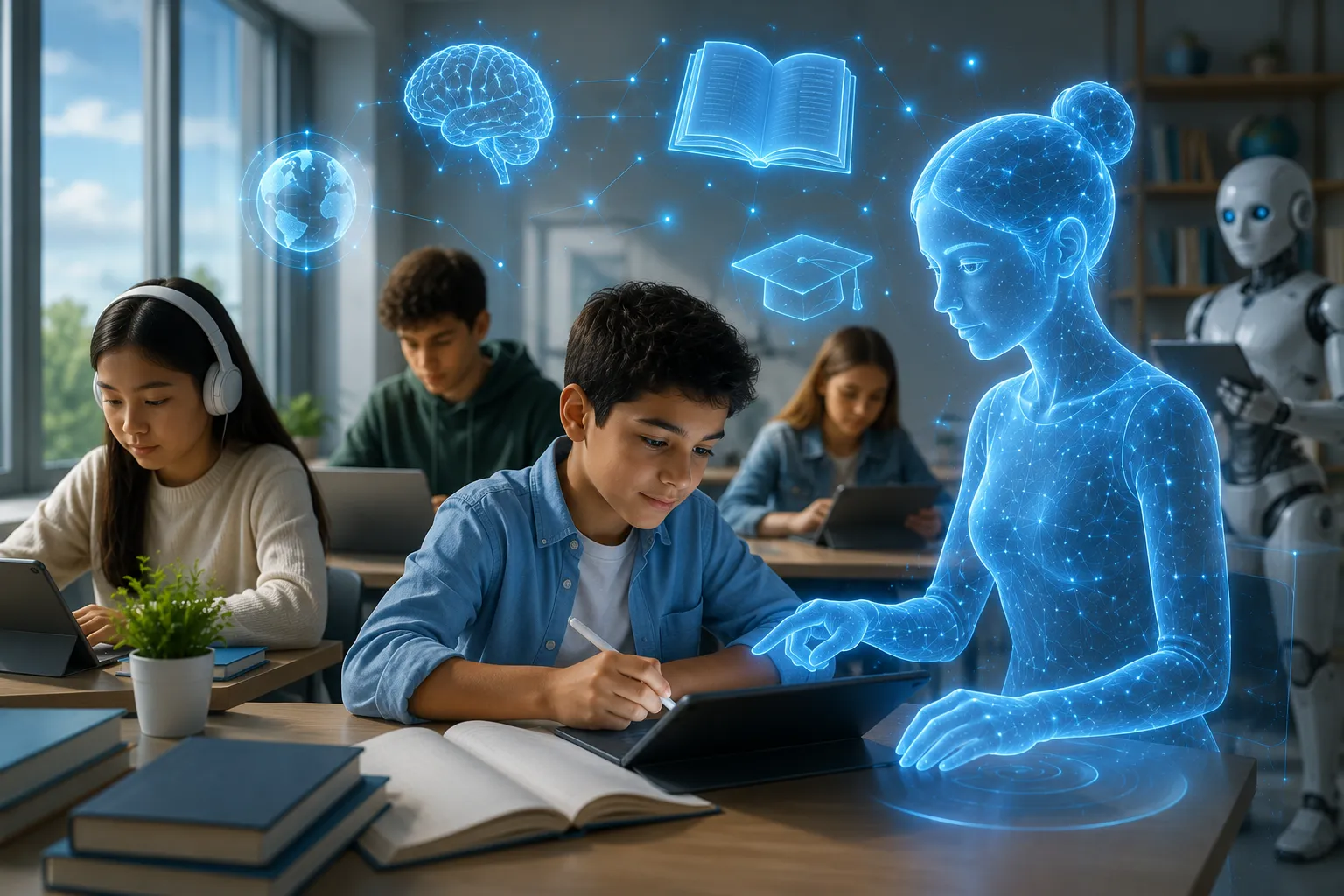
The Future of Artificial Intelligence is also transforming education by creating smarter and more personalized learning environments for students of all ages.
1. Personalized Learning Experiences
AI adapts educational content based on each student’s learning pace, strengths, and weaknesses, making lessons more engaging and improving academic performance.
2. Intelligent Learning Tools
AI-powered tutors, chatbots, and educational platforms provide instant support, answer questions, and help students learn anytime and anywhere through interactive experiences.
4. AI is Improving Business and Productivity
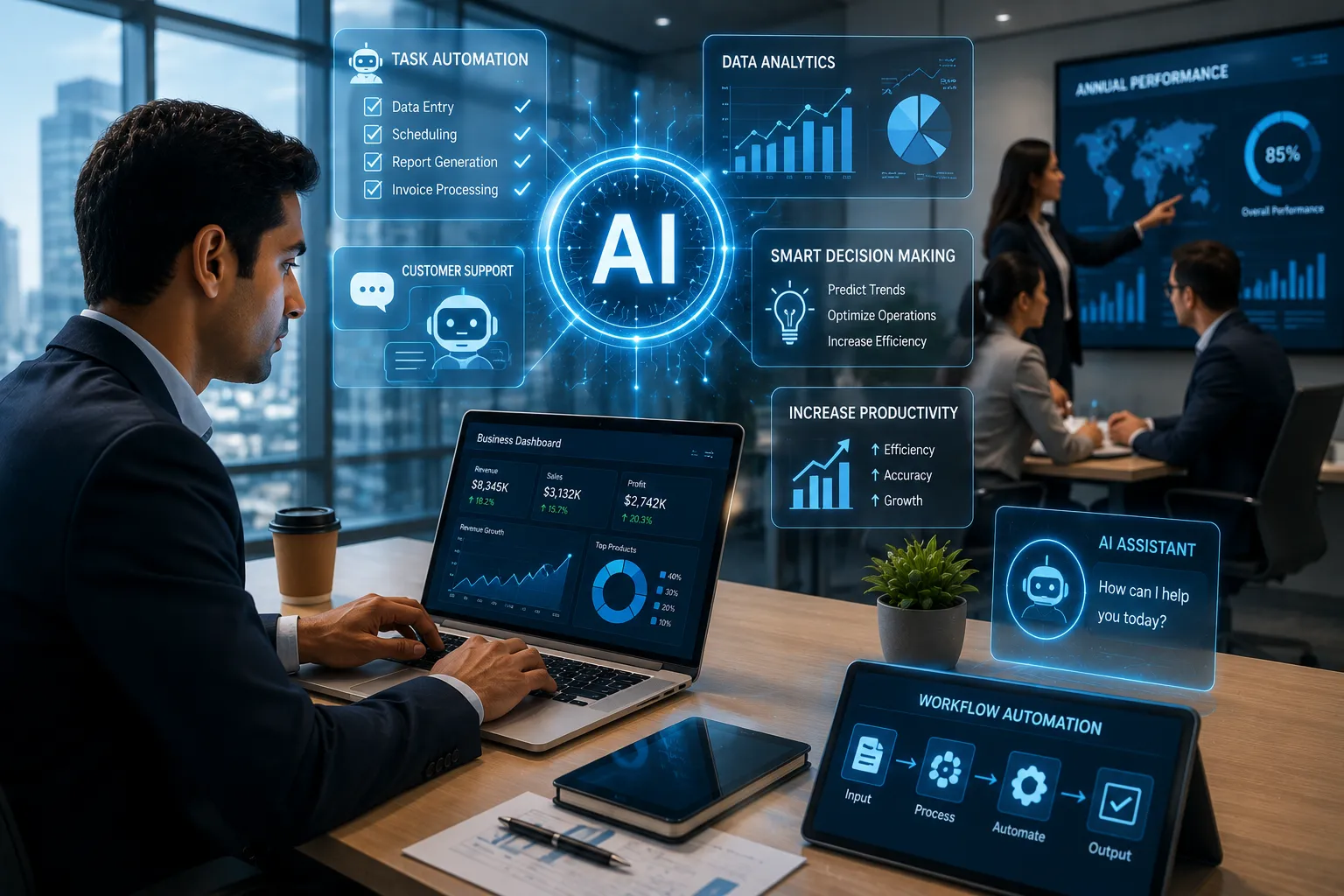
Businesses worldwide are embracing the Future of Artificial Intelligence to automate workflows, increase productivity, and make smarter business decisions.
1. Automation of Repetitive Tasks
Companies use AI to automate customer service, scheduling, data entry, inventory management, and many other repetitive tasks, allowing employees to focus on more strategic work.
2. Better Decision-Making Through Data
AI quickly analyzes large amounts of data to identify customer behavior, predict market trends, and generate valuable insights that support faster and more informed business decisions.
5. AI is Enhancing Everyday Life
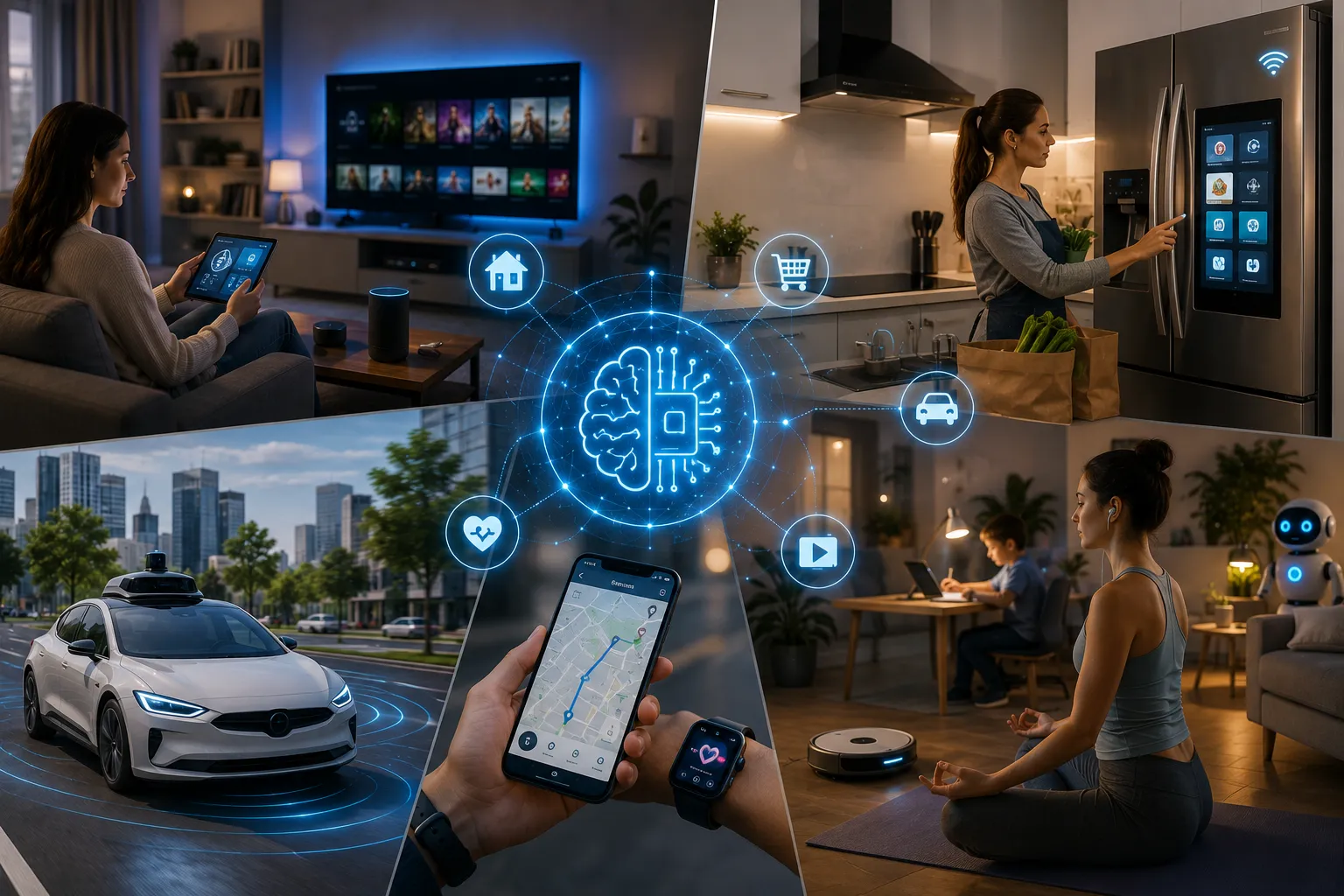
Beyond business and healthcare, the Future of Artificial Intelligence is making everyday life more convenient, connected, and efficient through smart technologies.
1. Smart Homes and Connected Devices
AI powers smart home systems that control lighting, security cameras, thermostats, and household appliances, making homes safer, more energy-efficient, and easier to manage.
2. Personalized Entertainment and Shopping
Streaming platforms and online stores use AI to recommend movies, TV shows, music, products, and services based on user preferences, browsing history, and purchasing behavior, creating highly personalized experiences.
Conclusion
The Future of Artificial Intelligence is transforming nearly every aspect of modern life, including communication, healthcare, education, business, and entertainment. As AI technology continues to advance, it will create smarter solutions, improve productivity, and unlock new opportunities across industries. Although important challenges such as privacy, ethics, and workforce changes must be addressed responsibly, the Future of Artificial Intelligence remains incredibly promising. By embracing AI responsibly and staying informed about emerging technologies, individuals and businesses can take full advantage of a more connected, innovative, and efficient future powered by Artificial Intelligence.