Large digital platforms process millions of interactions on a daily basis, making Website Testing Tools essential for maintaining performance, security, and user experience at scale. Even just one UI mistake, failed checkout flow, or security gap can affect brand reputation and income. You must have an organized strategy for quality assurance to get smooth performance.
For large-sized enterprises, choosing web application testing tools is no longer solely a technical decision. This is a business choice. Enterprises have their own issues, such as huge legacy systems, complicated integrations, multi-browser settings, and continuous delivery pipelines.
To maintain stability across these complex architectures, QA managers and engineering leads require reliable solutions. Let us examine the top website testing tools and frameworks that deliver enterprise-grade performance, along with a structured evaluation framework to guide your selection.
Key Priorities for Enterprise Web Testing
Before evaluating specific technologies, it is important to understand what makes a testing solution enterprise-ready. Small-scale applications often get by with basic automation scripts. Large platforms demand far more comprehensive capabilities.
Scalability and Parallel Execution
Enterprise applications feature thousands of test cases. Running these scripts sequentially slows down production deployment cycles. True enterprise tools support parallel execution across diverse browser environments, operating systems, and device viewports without degrading system performance.
Low Maintenance and Script Resilience
Web applications evolve constantly. Frequent UI modifications often cause traditional automated scripts to break, a problem commonly known as test flakiness. High-tier test automation solutions minimize this friction through advanced features like self-healing locators and smart element identification.
CI/CD Pipeline Integration
Modern development workflows rely on rapid code integration. Your chosen automation infrastructure must connect seamlessly with build and deployment orchestrators such as Jenkins, GitHub Actions, GitLab, and Azure DevOps. This connectivity enables automatic test triggers with every new code commit.
Top 5 Website Testing Tools and Frameworks
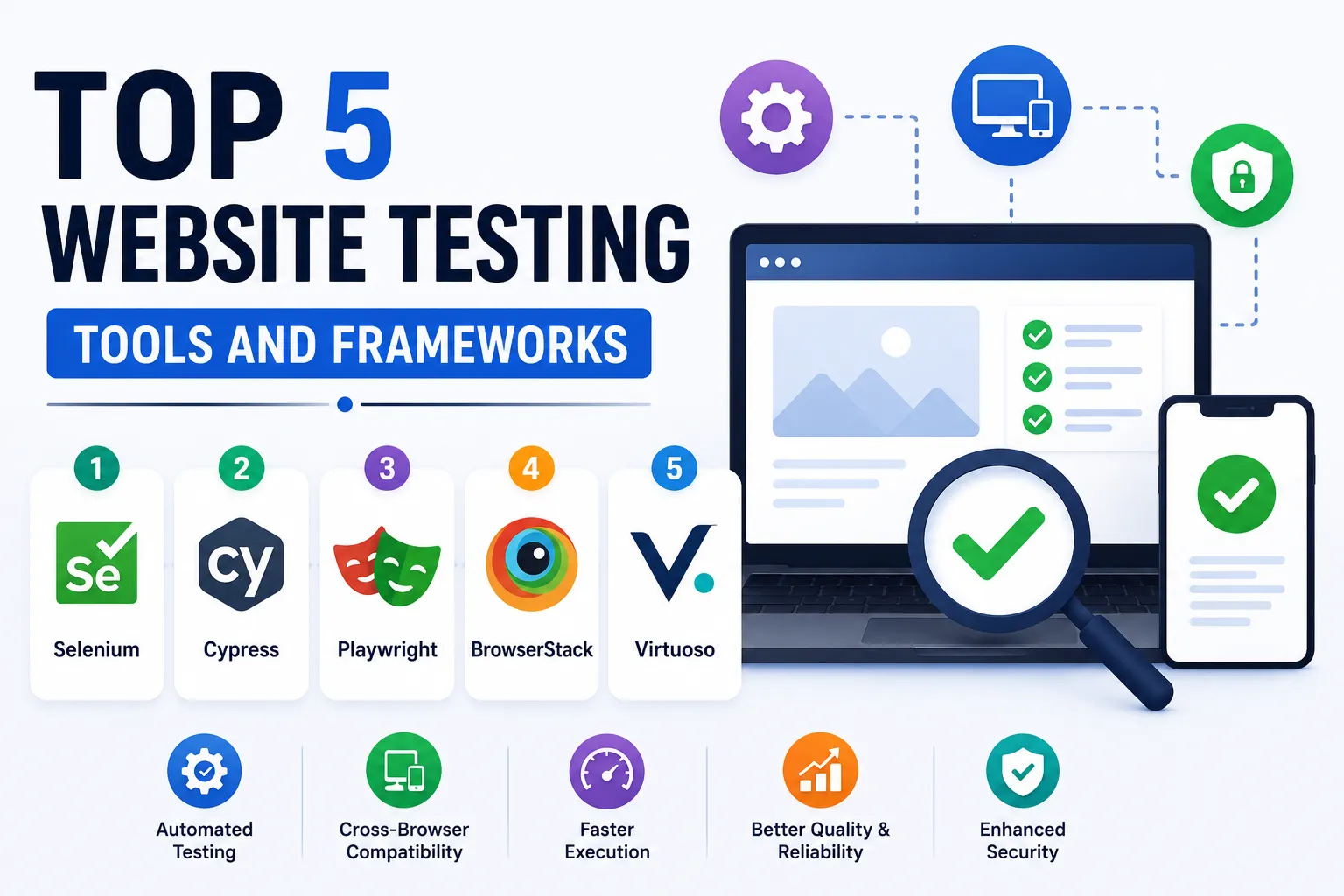
Selecting the ideal technology stack requires balancing open-source flexibility with managed vendor efficiency. As release cycles accelerate, enterprise website testing requires moving beyond traditional manual scripts toward intelligent validation models. Organizations are increasingly adopting enterprise autonomous testing to achieve self-healing test scripts and hands-free regression cycles.
Whether executing autonomous models or managing customized scripts, you need to ensure smooth deployment across complex application environments. The following options stand out as industry standards for large-scale operations.
1. Selenium
Selenium remains an established foundation for automated browser testing. Its strong architecture enables engineering teams to create highly personalized testing procedures that are custom-built for their organizational needs. It is based on the W3C WebDriver protocol, which means it can communicate directly with the browser engines to accurately emulate users.
- Core Characteristics: Supports popular languages such as Java, Python, C#, and JavaScript. It works on Windows, macOS, and Linux and communicates directly with native browser drivers.
- Enterprise Value: Open-source access eliminates initial licensing expenses. It offers the most amount of architectural freedom for sophisticated long-term software deployments. In fact, it’s common for enterprise teams to construct their own wrappers on top of Selenium Grid to scale testing over distributed servers, enabling thousands of cross-browser verifications to be executed in parallel.
2. Playwright
Microsoft’s Playwright is among the most popular choices for contemporary web testing. It is designed from the bottom up to enable modern single-page applications (SPAs), rapid deployment methods, and native support for deep asynchronous events.
- Core Characteristics: Auto-waits for elements to become interactive before executing actions, reducing script failures. It efficiently handles multi-tab interactions, shadow DOM elements, and native mobile emulation.
- Enterprise Value: Delivers exceptionally fast execution by communicating directly via browser debugging protocols such as Chrome DevTools. Its resilient design helps engineering teams accelerate their testing cycles. Built-in network interception allows teams to mock API backends, facilitating isolated front-end testing long before backend systems are finalized.
3. Cypress
Cypress provides a developer-friendly environment by executing tests directly in the browser. This architectural move makes debugging easier and delivers real-time execution insights that are difficult to obtain using external drivers.
- Core Characteristics: Includes a visual dashboard, automated time-travel debugging, and real-time screenshots. It executes activities that follow the same lifecycle as the application code.
- Enterprise Value: Excellent for front-end engineers and agile QA teams. It speeds up local test generation and makes code verification easier during active development stages. The ability to halt execution and view the actual state of the DOM at any point significantly saves the amount of time spent debugging unsuccessful automation runs in continuous integration environments.
4. BrowserStack
BrowserStack offers a complete, cloud-based architecture that enables rapid access to thousands of actual desktop browsers and mobile devices. Rather than using emulators, it boots up genuine operating systems on real hardware.
- Core Characteristics: Eliminates the necessity for an in-house hardware lab. It interacts with frameworks such as Selenium and Playwright to provide massively parallel cross-browser execution.
- Enterprise Value: Ensures that digital solutions work consistently across all user environments. It offers thorough diagnostic logs, video recordings, and network analysis tools. For businesses with stringent regulatory compliance standards, its secure, SOC2-compliant data centers and firewall tunnels allow for safe testing of internal staging environments.
5. Virtuoso

Virtuoso provides intelligent automation, which simplifies script writing using natural language processing (NLP) and machine learning. It tackles the skills shortage by extending automation beyond pure software developers.
- Core Characteristics: Enables teams to develop tests in simple English. It has self-healing capabilities that respond to UI changes without requiring human script adjustments.
- Enterprise Value: Fills the technical gap between functional testers and developers. It shortens test generation times and lowers the overhead associated with low-level script maintenance. Virtuoso uses machine learning methods to map the structural aspects of a web application, detecting when a button just changes color or location and automatically adjusting scripts without generating errors.
Enterprise Tool Comparison Matrix
To assist decision-makers in evaluating these technologies, the table below breaks down key capabilities, pricing structures, and ideal use cases.
| Solution Name | Primary Classification | Pricing Structure | Key Strengths | Potential Constraints | Optimal Enterprise Use Case |
| Selenium | Open-source website testing framework | Free | High customization; large community support | Requires deep coding expertise; setup takes time | Complex legacy setups demanding full control |
| Playwright | Modern open-source website testing software | Free | Exceptional execution speed; built-in auto-waiting | Newer ecosystem compared to older frameworks | Modern web applications and SPAs |
| Cypress | Developer-centric web application testing tools | Free open-source core; paid cloud dashboards | Simplified debugging; immediate feedback loops | Limited multi-tab and cross-domain capabilities | Quick front-end testing within sprint cycles |
| BrowserStack | Cloud-based testing infrastructure | Paid subscription models | Massive real-device cloud; secure networking | Subscription costs scale with user seats | Comprehensive enterprise cross-browser coverage |
| Virtuoso | AI-driven enterprise website testing tool | Custom enterprise pricing | Plain English test creation; self-healing scripts | Higher initial cost; less low-level code control | Fast-moving projects with blended QA teams |
Selecting the Right Solution for Your Architecture
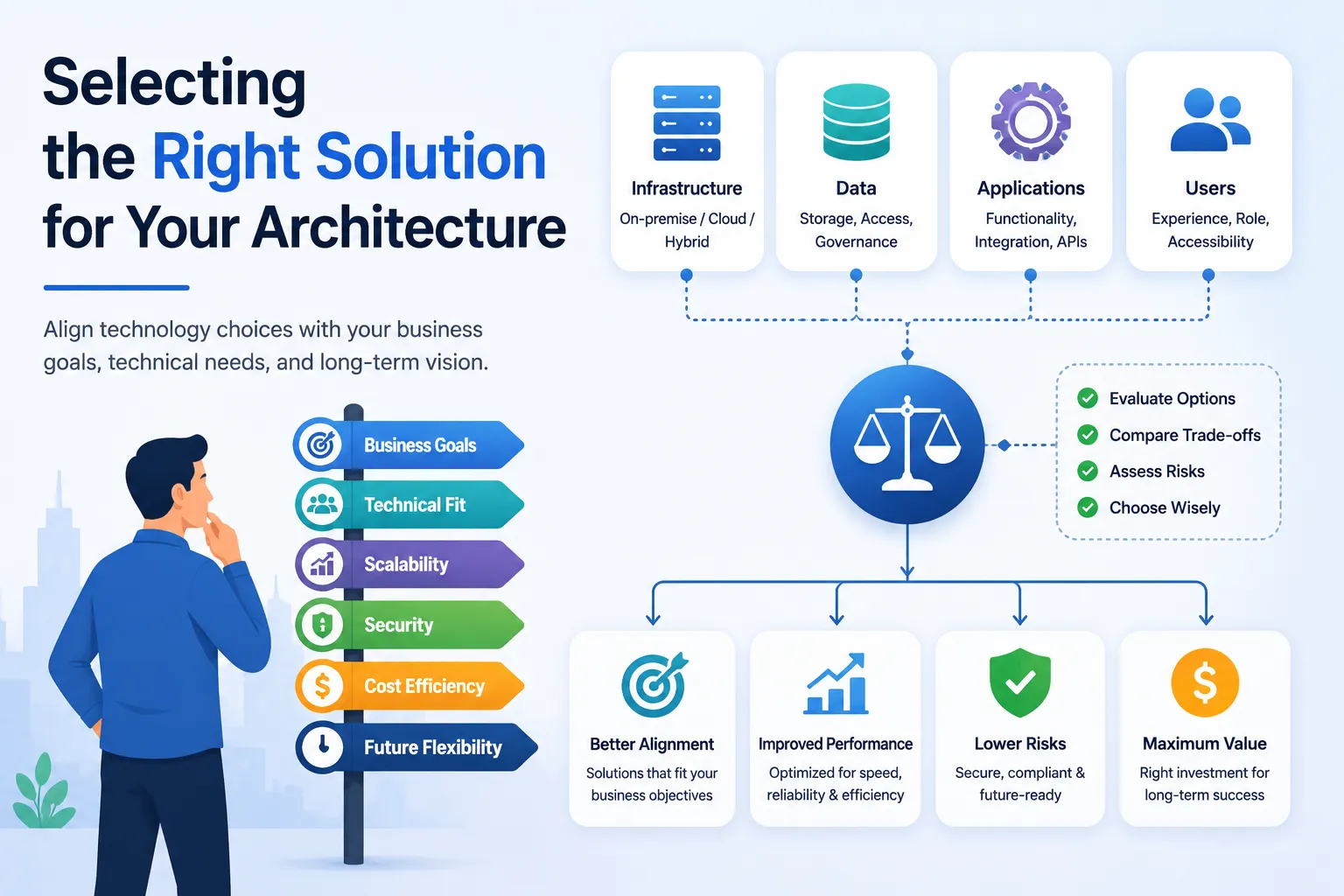
No single tool fits every corporate ecosystem perfectly. Before choosing a technological strategy, engineering executives should assess their own operational demands.
- Evaluate Team Skills: Open-source programming tools provide a lot of freedom if you have a team of good automation engineers for QA. Codeless or NLP-based systems enable cross-functional teams, including business analysts, to pick up new technologies more quickly.
- Review Current Infrastructure: Choose software options that align with how you develop things now. Container-friendly tooling makes it easy to link your pipelines running on cloud-native platforms.
- Balance Budget with Maintenance Costs: Open source solutions might not have upfront license costs, but they still require ongoing engineering work for setup and maintenance. Paid sites have less care but need subscription payments.
Concluding Thoughts
The first step toward achieving software stability at scale is choosing the right Website Testing Tools. However, even the most advanced technologies cannot solve quality challenges on their own. Enterprises need a well-structured testing strategy that combines automation, continuous validation, and human expertise to reduce delivery bottlenecks, improve software reliability, and protect the integrity of their digital platforms.
By selecting the right Website Testing Tools and working with experienced QA professionals, organizations can streamline testing processes, enhance user experiences, and maintain consistent performance across complex enterprise environments. This strategic approach helps businesses deliver high-quality applications while supporting long-term scalability and successful release cycles.