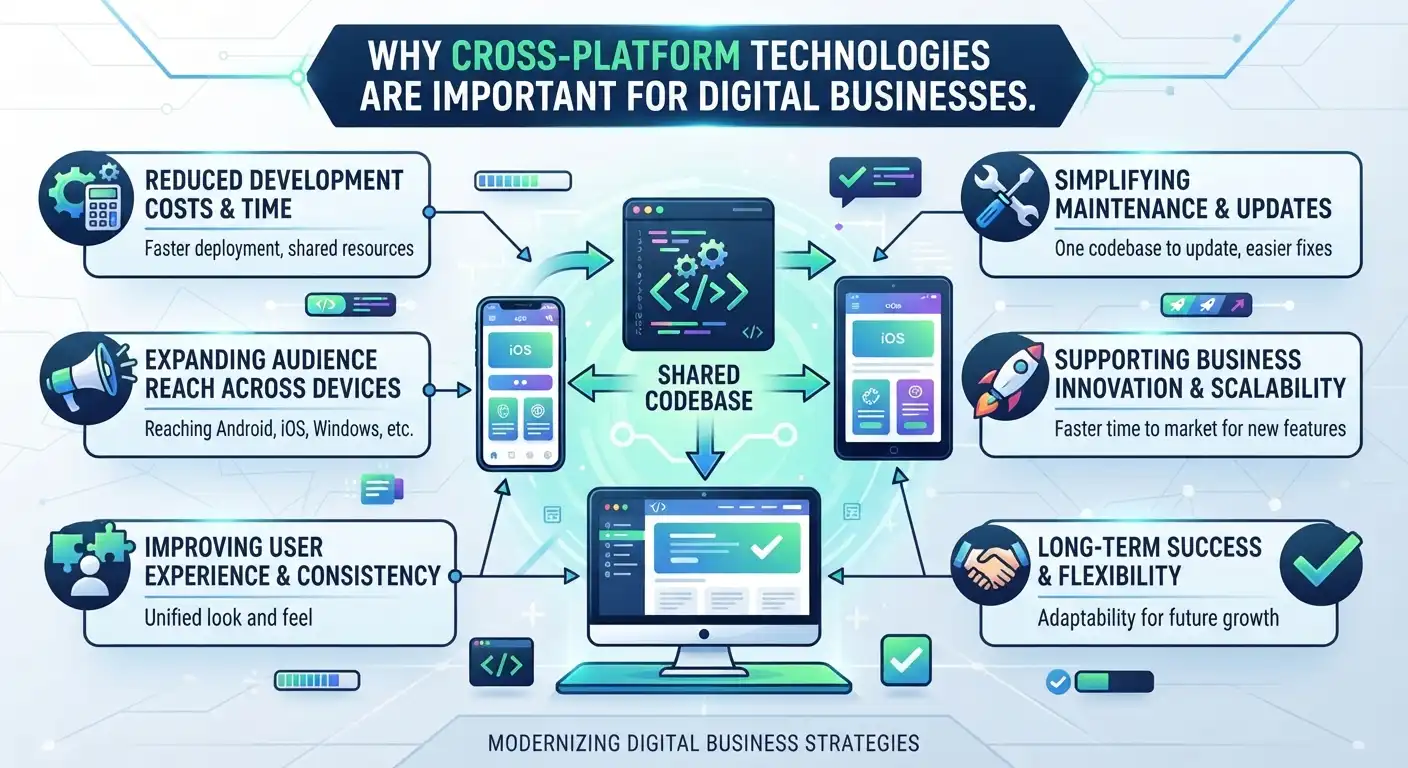
Technology is evolving rapidly, and businesses are continuously looking for better ways to connect with customers, improve operations, and remain competitive. Cross-Platform Technologies are becoming an important part of modern digital business strategies, helping companies deliver consistent experiences across multiple devices and operating systems. As people use different platforms to access digital services, businesses must ensure their products remain accessible, reliable, and efficient.
Instead of developing separate solutions for every operating system, businesses can now use technologies that allow them to build applications and digital products that work across different environments. This approach offers several advantages, including reduced development costs, faster deployment, and easier maintenance.
Understanding Cross-Platform Technology

Cross-platform technology refers to tools, frameworks, and development approaches that allow software to operate on multiple platforms using a shared codebase or development structure. Cross-Platform Technologies enables businesses to reach users across different devices without building completely separate products for each operating system.
For example, a business may want its digital application to work on Android, iOS, and other supported platforms. Cross-platform frameworks help development teams create solutions that maintain similar functionality and design across these environments.
Technologies such as Flutter and React Native have made this approach increasingly popular. They provide developers with tools to build applications efficiently while maintaining flexibility and performance.
Reducing Development Costs and Time

One of the biggest reasons businesses are adopting cross-platform technologies is cost efficiency. Traditional development often requires separate teams and codebases for different operating systems. This can increase project expenses, development time, and ongoing maintenance requirements.
Cross-Platform Technologies helps reduce these challenges by allowing developers to reuse significant portions of the code across multiple platforms. Businesses can manage development resources more effectively and focus their budgets on improving product quality.
Faster development also allows companies to introduce new features, test ideas, and respond to market demands without unnecessarily extending project timelines.
Expanding Audience Reach Across Devices

Modern consumers interact with digital services through smartphones, tablets, and other connected devices. Businesses that limit their digital products to a single platform may miss opportunities to reach potential customers.
Cross-platform technologies make it easier to provide services across different operating systems. This creates more opportunities for businesses to connect with diverse audiences and improve accessibility.
For companies investing in mobile app development, Cross-Platform Technologies can provide a practical way to reach both Android and iOS users while maintaining a consistent product experience. This approach also allows organizations to manage resources more effectively while creating accessible digital services for a wider customer base.
A broader digital presence can help businesses improve customer engagement, strengthen brand visibility, and create more convenient ways for people to access their services.
Improving User Experience and Consistency
Customer experience plays an important role in the success of digital products. Users expect applications to be reliable, responsive, and easy to navigate, regardless of the device they choose.
Cross-Platform Technologies helps businesses maintain consistent interfaces, navigation patterns, and essential features across supported platforms. This familiarity can make digital products easier to use and reduce confusion when customers switch between devices.
However, consistency does not mean every platform must look and behave identically. Developers still need to consider platform-specific design guidelines, device capabilities, and user expectations to deliver a natural experience.
Simplifying Maintenance and Future Updates
Launching a digital product is only the beginning of its lifecycle. Businesses must regularly update their software, fix technical issues, introduce new features, and address security concerns.
Managing separate applications can make these responsibilities more complicated. Cross-platform development can simplify maintenance by allowing teams to manage shared functionality within a common codebase.
By using Cross-Platform Technologies, development teams can reduce duplicated work and make certain updates easier to implement. It also allows them to spend more time improving performance, security, and functionality instead of maintaining multiple independent systems.
Supporting Business Innovation and Scalability
As businesses grow, their technology requirements often become more complex. They may need to introduce new services, integrate third-party platforms, support additional devices, or improve existing digital infrastructure.
Cross-Platform Technologies can provide the flexibility needed to support these changes. It allows businesses to develop digital products that can evolve alongside their operational requirements.
For startups, this approach can make it easier to launch an initial product and test market demand. Established organizations can also use cross-platform solutions to modernize existing systems and improve their digital services.
Nevertheless, selecting the right framework requires careful consideration of project complexity, performance requirements, security, and long-term business objectives.
Choosing the Right Technology for Long-Term Success

Although cross-platform development offers several advantages, it is not the ideal choice for every project. Some applications require advanced hardware integration, highly specialized performance, or platform-specific functionality that may benefit from native development.
Businesses should evaluate their objectives, target audience, available resources, and technical requirements before selecting a development approach. Working with experienced technology professionals can also help organizations identify suitable tools and avoid unnecessary technical limitations.
Choosing the right Cross-Platform Technologies requires balancing development efficiency with application performance, flexibility, security, and long-term business goals.
The best technology decision is not always the one that promises the fastest development. It is the one that provides reliability, flexibility, and long-term value.
Conclusion
Cross-Platform Technologies is becoming increasingly important because it helps digital businesses reach wider audiences, manage development resources, and deliver consistent digital experiences. As customer expectations and technology requirements continue to evolve, flexible development approaches will play an important role in business innovation.
By choosing suitable frameworks and focusing on long-term performance, organizations can build digital solutions that adapt to changing market demands. Cross-platform development is not simply about creating software for multiple devices; it is about making technology more accessible, efficient, and valuable for modern businesses.