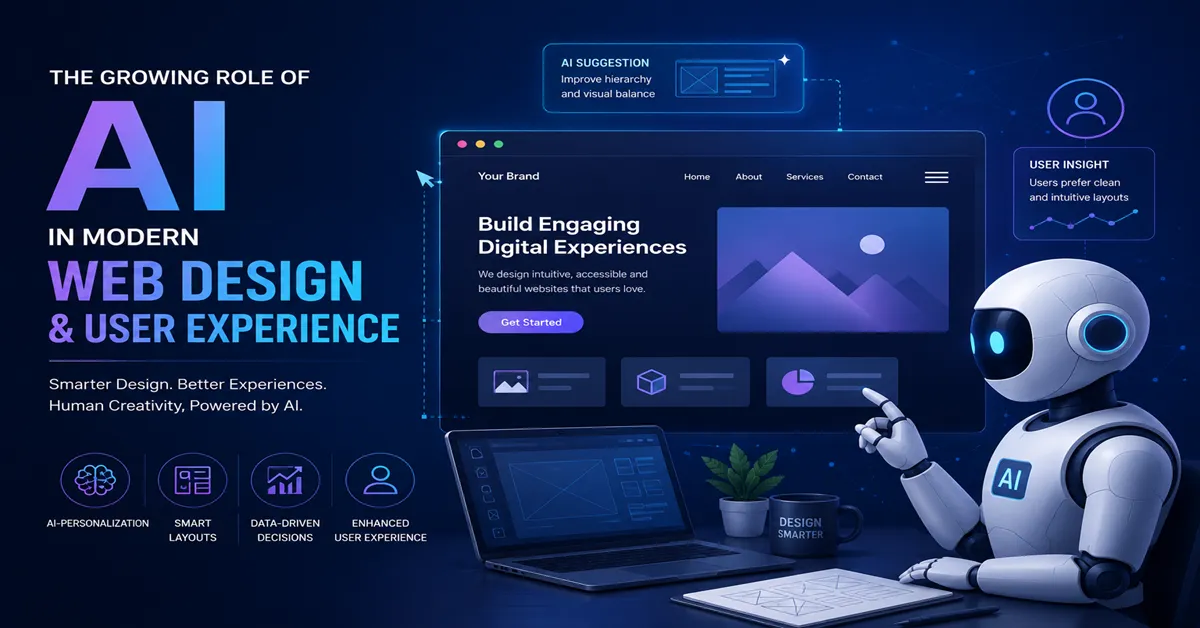
A website no longer succeeds simply because it looks modern. It succeeds because it understands visitors, reduces friction, and helps people complete tasks with minimal effort. That shift has made AI in Web Design a core part of digital product strategy rather than just another design trend.
Today, AI in Web Design is transforming how websites are planned, designed, tested, and continuously improved. Instead of relying on assumptions, businesses can make smarter experience decisions using behavioral patterns, predictive insights, and automation while still keeping human creativity at the center of every design decision.
AI is Moving Beyond Design Automation
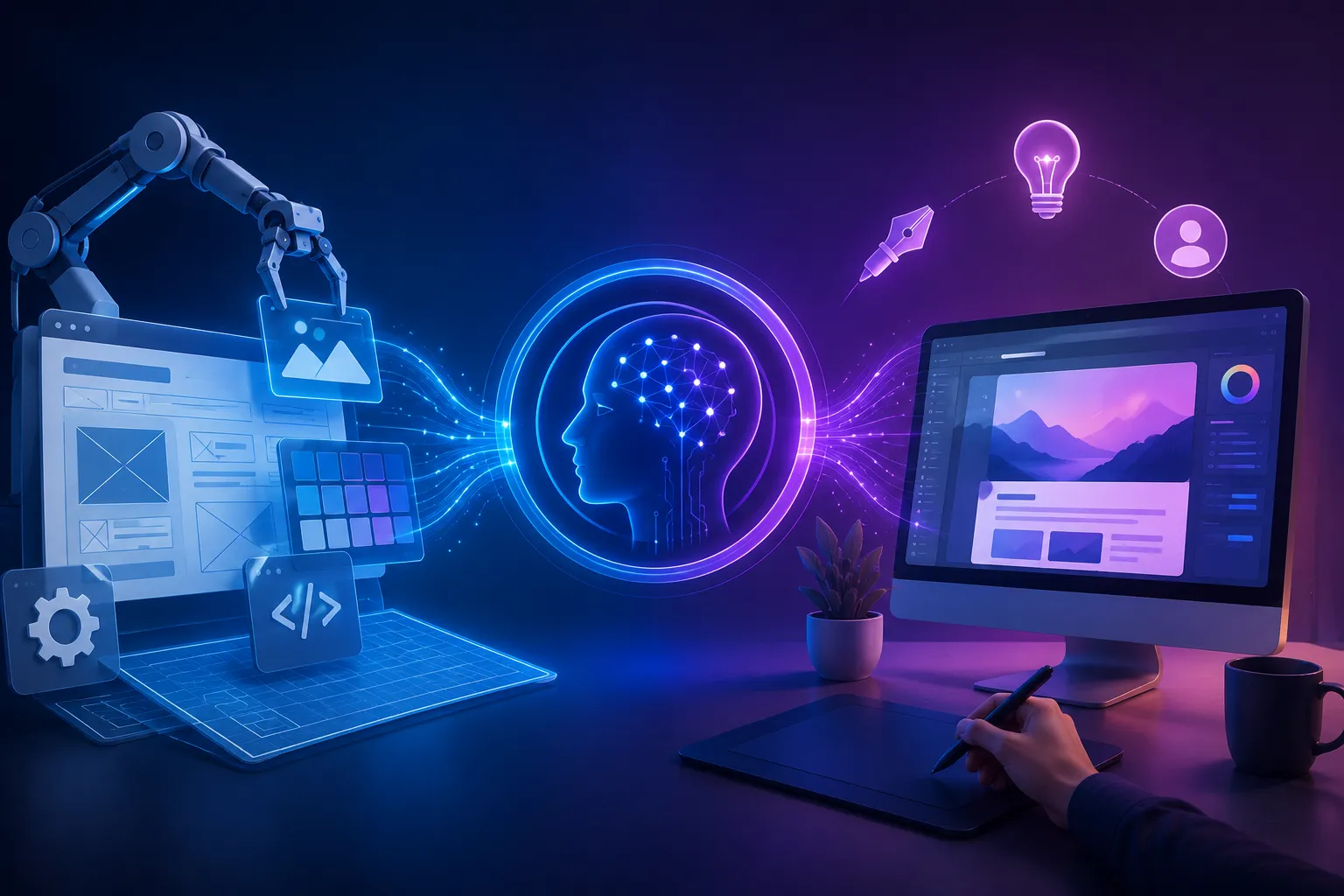
The first generation of AI tools focused on generating layouts, writing copy, or producing images. The latest generation goes much further.
Modern AI is becoming an active design assistant that helps teams:
- Analyze visitor behavior before redesign decisions
- Recommend interface improvements based on real usage
- Generate multiple UI variations for rapid testing
- Detect usability issues during development
- Support developers by accelerating front-end implementation
This allows design and development teams to spend less time on repetitive production work and more time solving customer problems.
The biggest change is not faster website creation – it’s better decision-making throughout the web design process.
Personalization Is Becoming the Standard
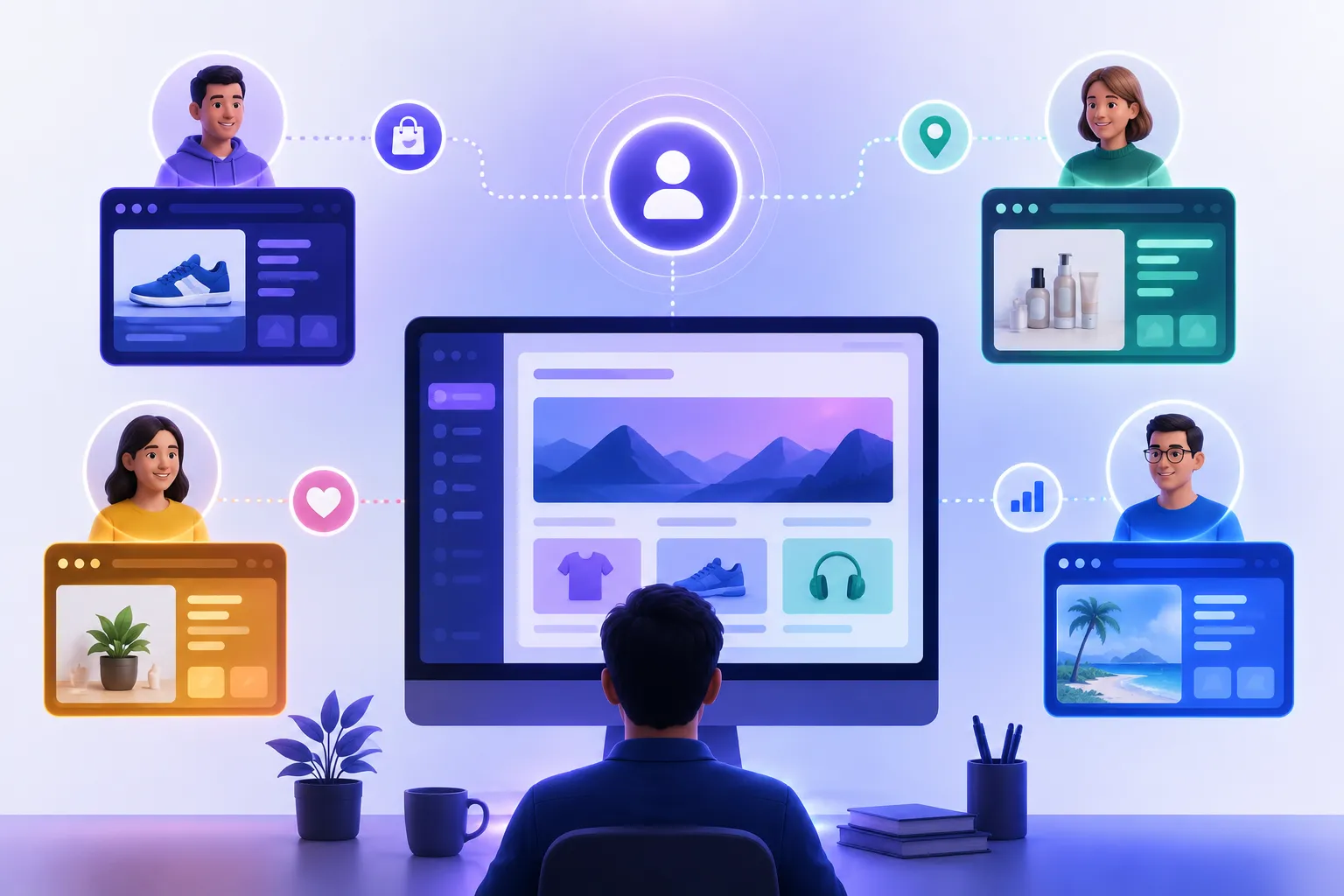
Users increasingly expect websites to recognize their intent instead of showing identical experiences to everyone. Rather than presenting fixed journeys, AI can adjust experiences according to:
- Browsing behavior
- Purchase history
- Geographic location
- Device preferences
- Returning visitor patterns
These adaptive UX solutions generate experiences that are relevant to varied audiences without the need for separate websites.
When done correctly, personalization boosts engagement while retaining user confidence through transparent data methods.
AI Is Improving UX Long After Launch
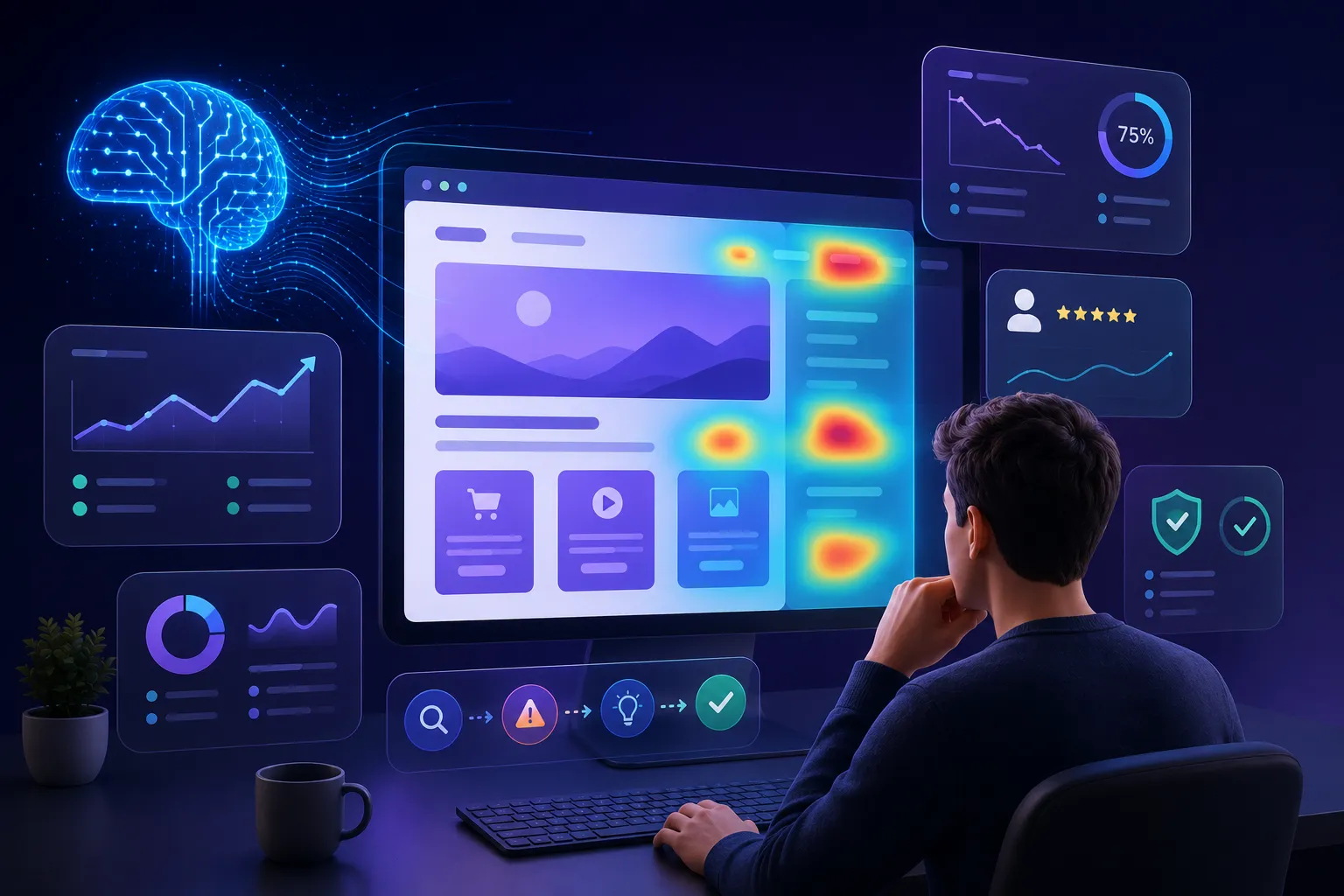
A website launch is no longer the finish line. The increasing usage of AI after deployment is one of the most significant developments in recent years. Teams continually monitor user behavior and find areas for improvement rather than waiting months for analytics evaluations.
Examples include:
- Predicting drop-off points during customer journeys
- Identifying confusing navigation paths
- Recommending accessibility improvements
- Detecting performance issues affecting conversions
- Prioritizing UX enhancements based on user impact
According to recent industry research, more than half of organizations using collaborative design platforms are actively integrating AI into existing digital products rather than treating it as a standalone experiment.
Current Trends Shaping Modern Web Design Experiences
Several developments are influencing digital experiences today.
AI-Assisted Design Systems
Design systems are becoming smarter by automatically recommending components, maintaining consistency, and reducing repetitive design work.
Agentic Design Workflows
Instead of waiting for instructions, latest AI-assisted platforms can complete connected tasks such as creating prototypes, suggesting improvements, and supporting developer workflows under human supervision.
Human-Centered Interfaces
Interestingly, as AI-generated layouts become more common, leading digital products are moving towards distinctive visual identities, authentic storytelling, and experiences that feel less templated and more human. That balance is quickly becoming a competitive advantage.
Why Do Human Expertise Still Matters?
Despite rapid advances, AI should not dictate product decisions. It cannot fully understand:
- Brand positioning
- Customer psychology
- Market differentiation
- Complex business objectives
- Emotional design choices
AI can accelerate execution, but it cannot replace the thinking behind strong digital experiences. Decisions involving customer expectations, product direction, and brand differentiation continue to rely on people with domain expertise. Lasting results come from combining intelligent tools with experienced teams that know where automation adds value and where human insight should lead. Carefully implemented AI and ML services enable that balance without disrupting existing digital operations.
Conclusion
Digital experiences are entering a new era where websites are expected to evolve continuously rather than remain static after launch. AI enables businesses to better understand user behavior, identify opportunities for improvement, and deliver faster, more personalized experiences that increase engagement and conversions.
Investing in AI in Web Design is no longer about following the latest technology trend. It is about building smarter, more adaptive digital products that combine automation with human creativity to deliver exceptional user experiences. Businesses that embrace AI in Web Design while continuing to rely on human expertise for strategy, branding, and customer understanding will be better positioned to stay competitive as user expectations continue to evolve.