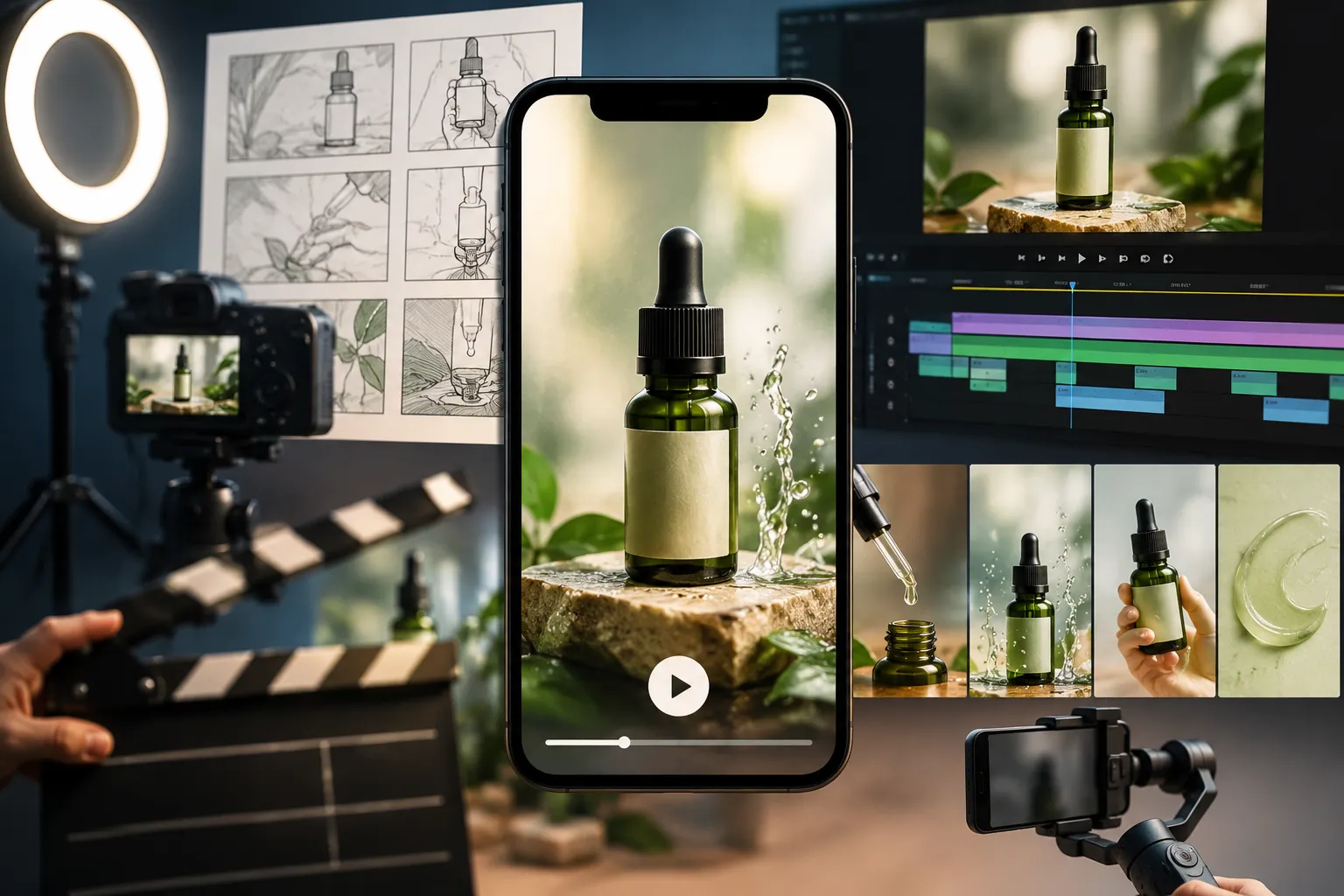
A lot of short-form product videos are edited like everyone involved watched them 40 times before launch.That sounds obvious, but it changes the pacing in ways teams usually stop noticing.
Shots stay on screen too long because somebody fought hard to get the lighting right. Transitions become cleaner and cleaner after every review round. Music gets pushed louder because the edit starts feeling “slow” after internal teams have replayed it for two weeks straight. Eventually the thing starts moving like a presentation instead of a piece of content competing for attention beside group chats, memes, and people arguing in comment sections.
You can feel when an edit has been over-discussed.
The strange thing is that some of the best-performing short-form product videos right now are technically less impressive than the ones brands were making five or six years ago. Less polished lighting. Fewer dramatic camera moves. More abrupt cuts. Sometimes worse footage, honestly.
But the pacing feels awake.
That matters more now than people want to admit.
The First Three Seconds Usually Decide Everything
Not because attention spans are “dead.” That explanation always feels lazy to me.
People will still sit through a two-hour podcast clip filmed on a bad webcam if the tension is right. The issue is friction. Viewers decide almost immediately whether a video understands the environment it exists in.
A lot of commercial edits still enter too carefully. Wide shot. Product reveal. Soft music swell. Floating text animation.
The viewer already knows it’s an ad before the product even appears.
Some of the stronger openings I’ve seen lately actually withhold context for a second. They start close. Strange angle. Fast action. Maybe the product isn’t fully visible yet. The edit creates a tiny moment where the brain has to resolve something.
Not confusion exactly. Just enough incompleteness to prevent passive scrolling.
And fast pacing alone doesn’t solve this. There’s a version of “high-energy editing” that feels assembled from platform trends rather than actual observation. You see it a lot in DTC product ads. Five cuts per second. Aggressive captions. Artificial urgency everywhere.
Then retention falls off a cliff around second six.
Usually because the rhythm became predictable too quickly.
Most Product Videos Die in the Middle
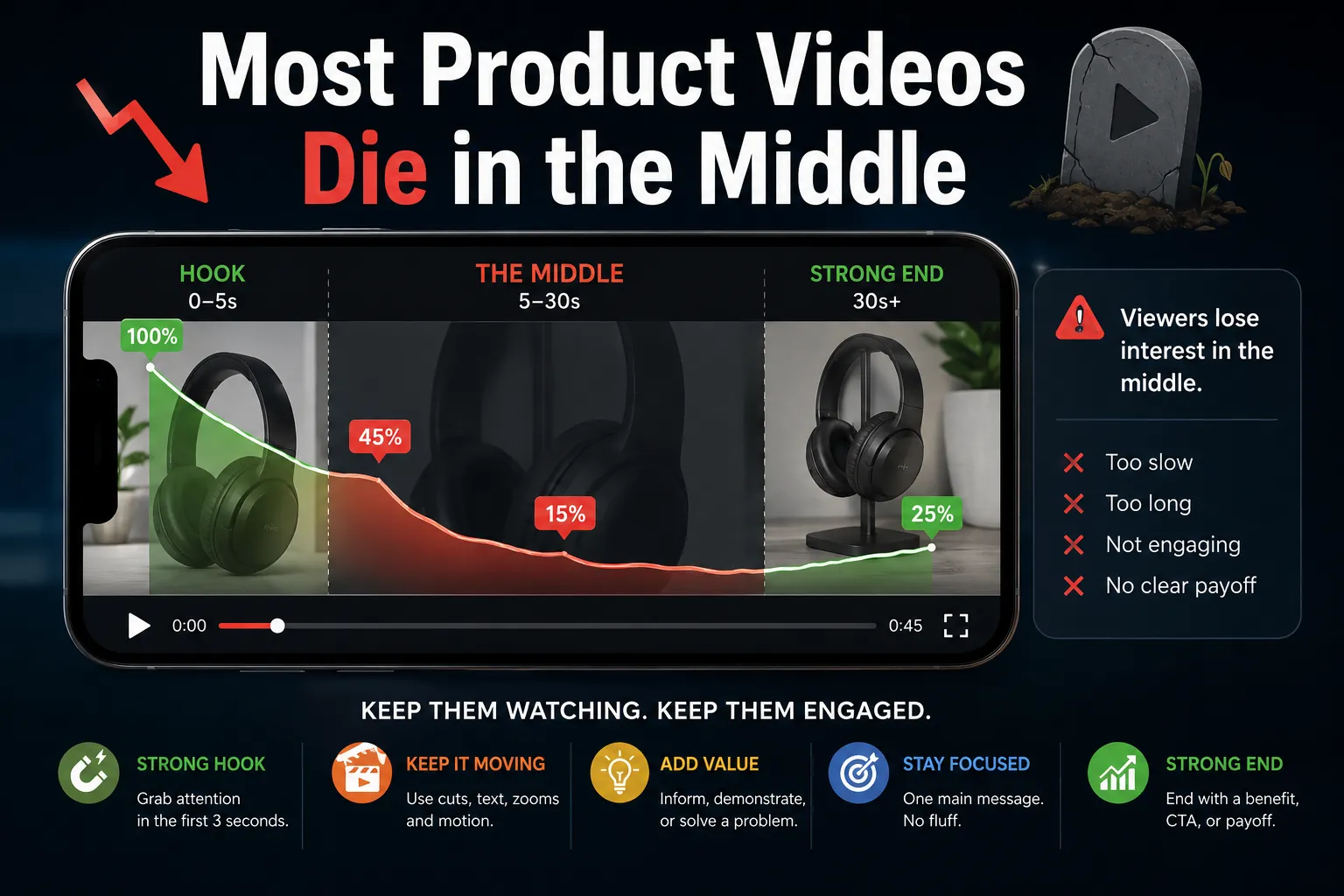
This happens constantly.
The opening gets attention. The product gets introduced. Then the edit quietly starts repeating itself without anyone noticing during review.
Same shot duration. Same movement pattern. Same feature-callout structure.
By that point the viewer already understands how the video behaves, and once that happens, attention gets slippery. The product may still be technically visible, but the momentum disappears underneath it.
I think this is where internal stakeholder feedback tends to damage short-form editing the most. Everybody wants their feature included. Legal needs another line. The product wants another angle showing functionality. Marketing wants the value proposition restated more clearly.
So the middle of the video turns into a sequence of confirmations instead of progression.
That flattening effect is hard to explain in meetings because nothing looks obviously wrong in isolation. Each shot works individually. The problem is cumulative rhythm.
Good editors interrupt themselves constantly.
Not in a chaotic way. More like controlled instability.
A sudden tighter crop. Dead silence for half a second. A strange pause before the payoff shot. Even holding on a reaction slightly longer than expected can reset viewer attention if everything before it moves quickly.
The “Pattern Completion” Problem
People recognize editing patterns faster now than most creative teams realize.
After maybe eight or nine seconds, viewers subconsciously map the structure. They know when captions appear. They know how transitions land. They know the music build pattern. At that point they’re not watching actively anymore. They’re predicting.
Once prediction replaces curiosity, retention usually drops.
I’ve watched editors accidentally smooth the life out of strong cuts during revision rounds because every transition became too resolved. Too complete. Nothing surprising survived the cleanup process.
Sometimes leaving a little edge in the pacing helps. A cut that lands slightly earlier than expected. Motion that doesn’t fully resolve before switching frames. Tiny things.
Not random messiness. More like resisting the urge to over-finish every moment.
Good Editors Cut Earlier Than Feels Comfortable
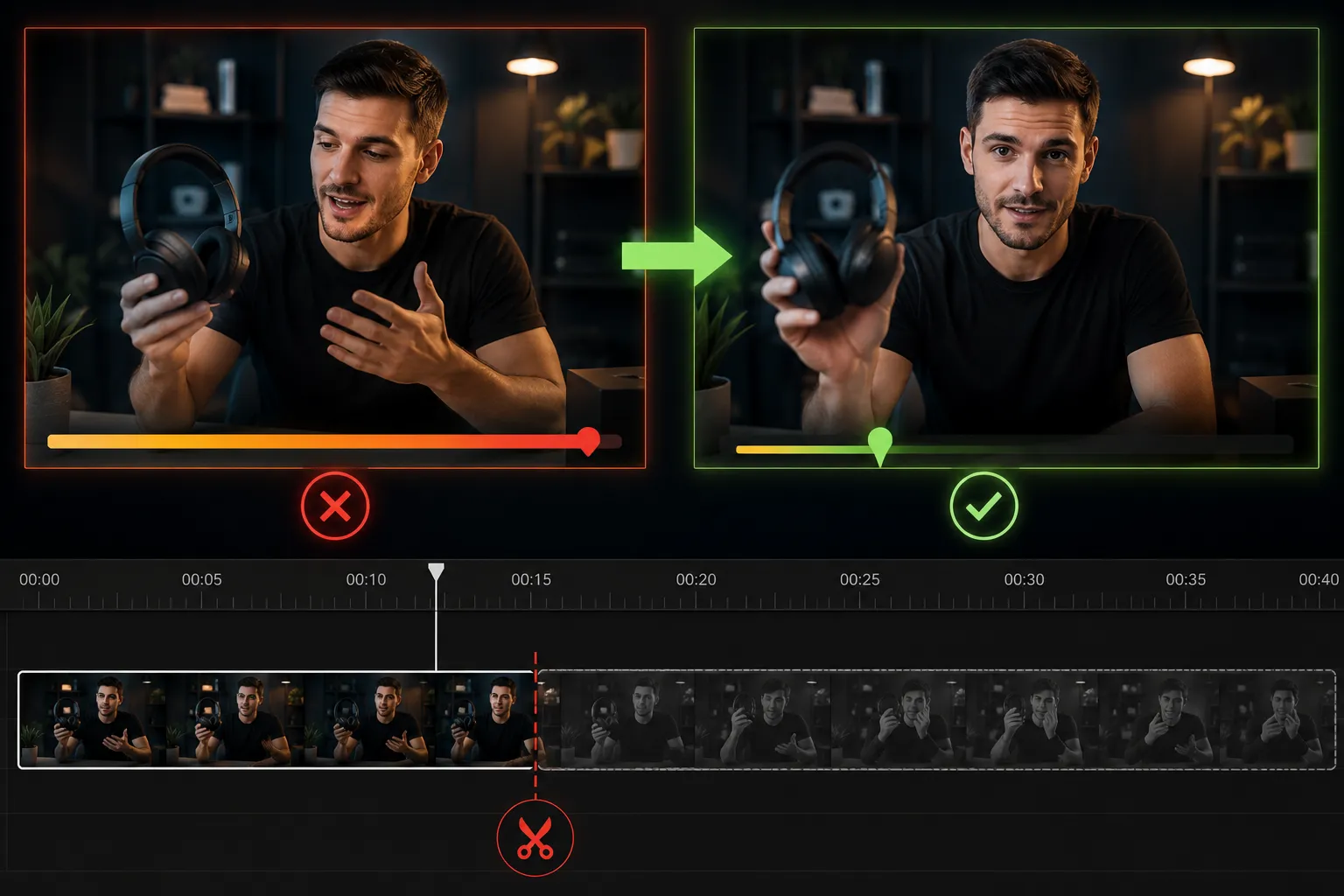
There’s usually a moment in post-production where someone says, “Can we just hold that shot a little longer?”
Most of the time the answer should probably be no.
Expensive footage causes this problem constantly. Especially in commercial production where a single setup may have taken an hour to build. Once teams know how much work went into capturing something, they naturally want screen time to justify the effort.
Viewers have no relationship to that effort though.
They react to pacing, not production difficulty.
I remember sitting in edits where the strongest version of the cut involved removing the most technically complicated shot from the day because it slowed everything around it down. Beautiful footage. Completely wrong for the rhythm.
That tension between production value and pacing never fully goes away.
Editors also tend to notice dead air differently than non-editors do. Not literal silence. Visual hesitation. Lingering intention after the point has already landed. Once you start seeing it, it becomes hard to unsee.
Some product videos aren’t actually boring conceptually. They’re just late. Every cut arrives a second after the viewer has already moved on mentally.
Sound Design Quietly Carries Half the Edit
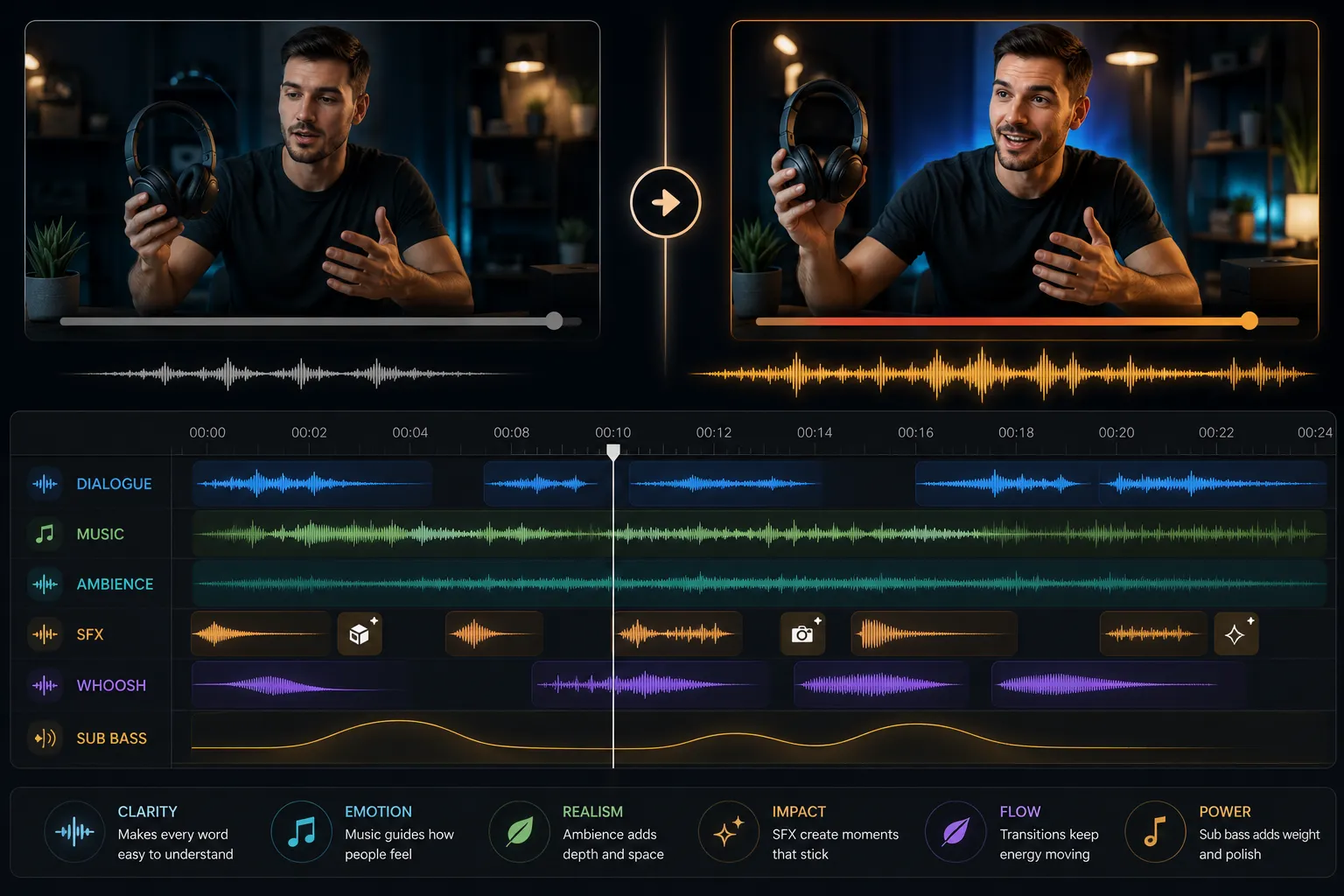
Maybe more than half sometimes.
You notice this especially when reviewing rough cuts without final audio. A visually strong sequence can suddenly feel oddly lifeless once the temporary sound disappears. Product videos rely heavily on tactile reinforcement even when viewers don’t consciously register it.
Packaging movement. Surface contact. Magnetic closures. Fabric texture. Tiny mechanical sounds.
Those details matter because short-form product videos are trying to simulate physical confidence through a screen. Sound helps bridge that gap.
There was a period where brands started over-cinematicizing everything. Huge trailer impacts. Massive bass drops. Endless whooshes layered onto simple product movements. It made a lot of products feel interchangeable after a while. Same energy package applied everywhere.
Sometimes quieter audio creates more authority.
One thing I’ve noticed: weak editors often use music to force momentum that the pacing itself hasn’t earned yet. Stronger editors let the cut structure carry more of the movement naturally. The soundtrack supports tension instead of manufacturing all of it.
Different thing entirely.
The Best Performing Cuts Often Feel Slightly Unfinished
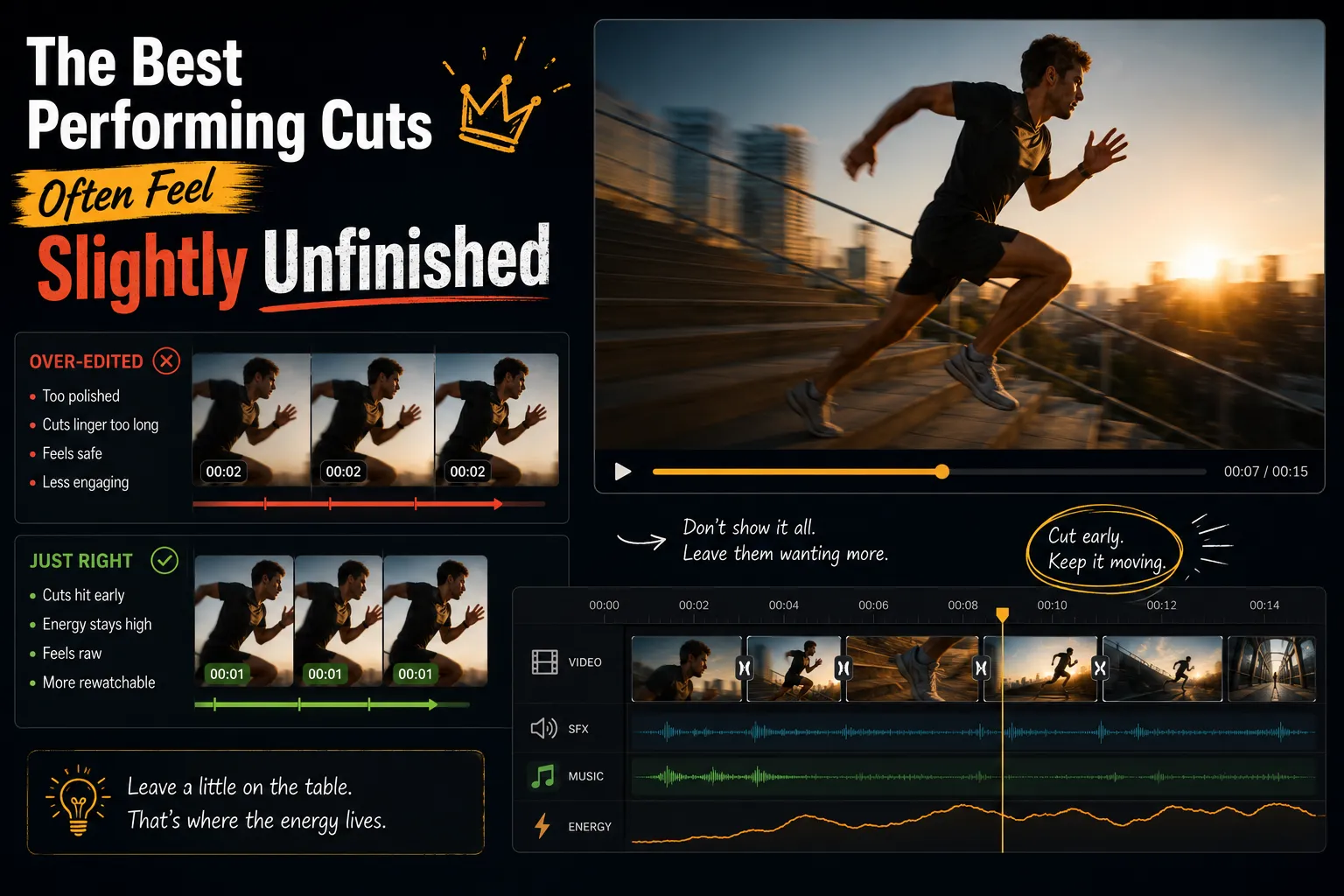
This part makes some traditional ad teams uncomfortable.
Because “unfinished” sounds like lower quality, and that’s not really what’s happening.
A lot of highly polished commercial editing now creates emotional distance on social platforms. The symmetry becomes too obvious. Every movement feels approved. Every transition feels mathematically cleaned up.
Meanwhile, social-native content still feels alive because it retains small irregularities.
An imperfect reframing. Slight handheld instability. Faster-than-expected cuts. Occasional asymmetry in sentence pacing or shot timing. Nothing major. Just enough texture to preserve immediacy.
You can feel when a video still has oxygen in it.
The tricky part is that fake rawness usually collapses immediately. Audiences are weirdly good at detecting manufactured authenticity now. Probably because they see so much of it every day.
There’s a Difference Between Raw and Sloppy
Good social-native editors still have an enormous amount of control underneath the surface.
That’s the part people miss.
The cuts may feel loose, but the eye direction is intentional. Product hierarchy is intentional. Timing compression is intentional. The structure underneath still holds everything together even if the surface feels less commercial.
When brands misunderstand this, they usually swing too far toward chaos and lose clarity completely.
Rawness without control just becomes exhausting to watch.
Editing Is Really About Compressing Decision-Making
Most viewers are not carefully evaluating product specifications in short-form environments. They’re arriving at emotional conclusions first, then justifying them afterward if needed.
Editing shapes that process more aggressively than people think.
A product can feel premium because the pacing feels confident. Or cheap because the edit over-explains itself. Sometimes a two-frame hesitation before a feature reveal changes perceived sophistication more than the feature itself.
Which sounds ridiculous until you spend enough years watching retention data and client revisions collide with actual viewer behavior.
The edit determines whether people feel friction.
That’s really the game underneath all this.
Some of the Best Editing Decisions Happen Before the Shoot Starts
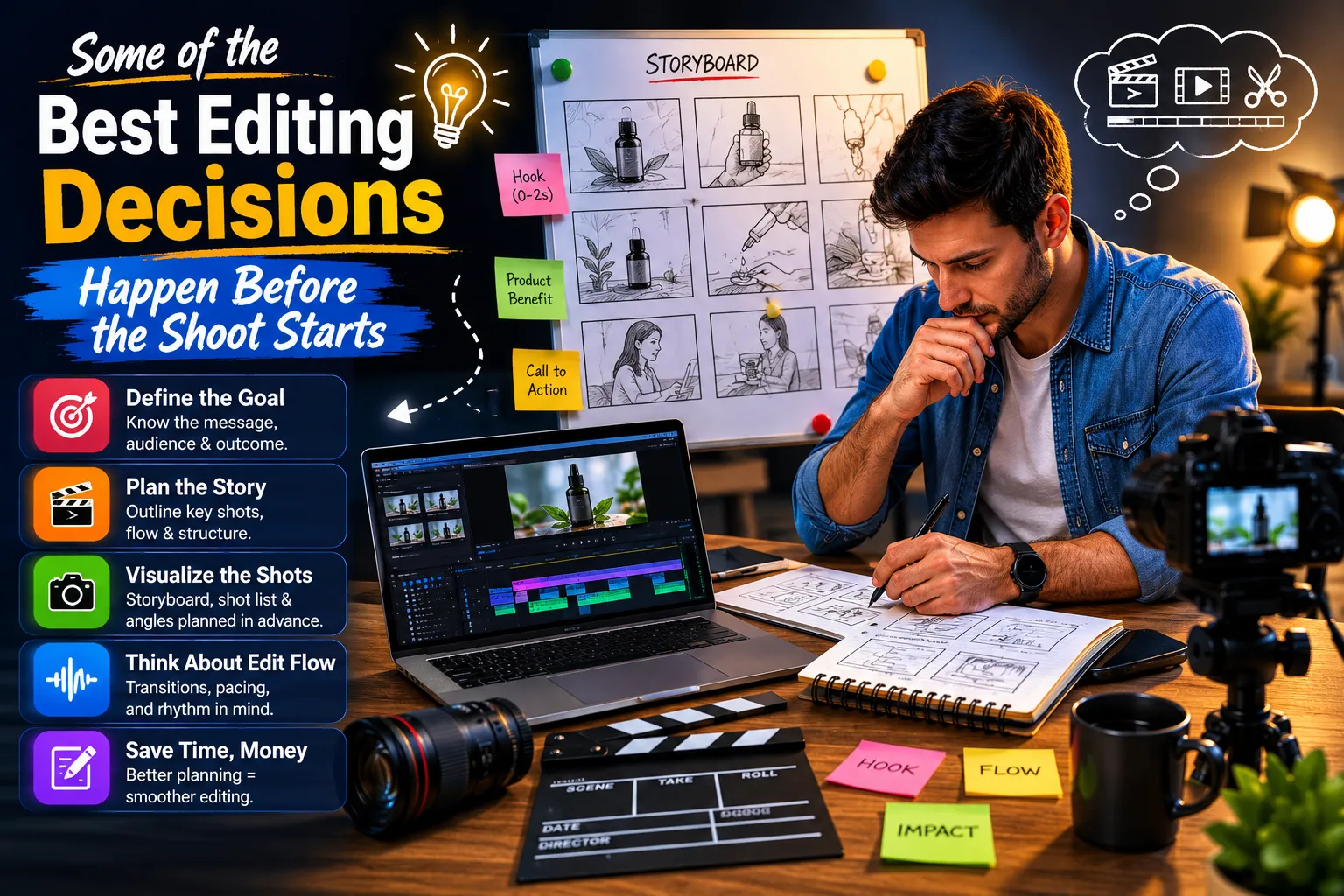
You can usually tell pretty quickly whether footage was captured by people thinking about the edit while shooting.
The coverage behaves differently.
Transitions exist naturally inside movement. Extra texture shots appear without needing explanation. Vertical framing doesn’t feel like an afterthought later. Even small things like allowing room for captions changes how usable footage becomes in post.
When production teams ignore edit flexibility, post-production turns into recovery work. Editors start manufacturing pacing solutions instead of refining them.
And honestly, some videos never fully recover from that.
The strongest shoots I’ve been part of usually involved editors influencing production decisions early, before cameras rolled. Not because editing is more important than production. More because short-form pacing problems are expensive to solve afterward. Sometimes impossible.