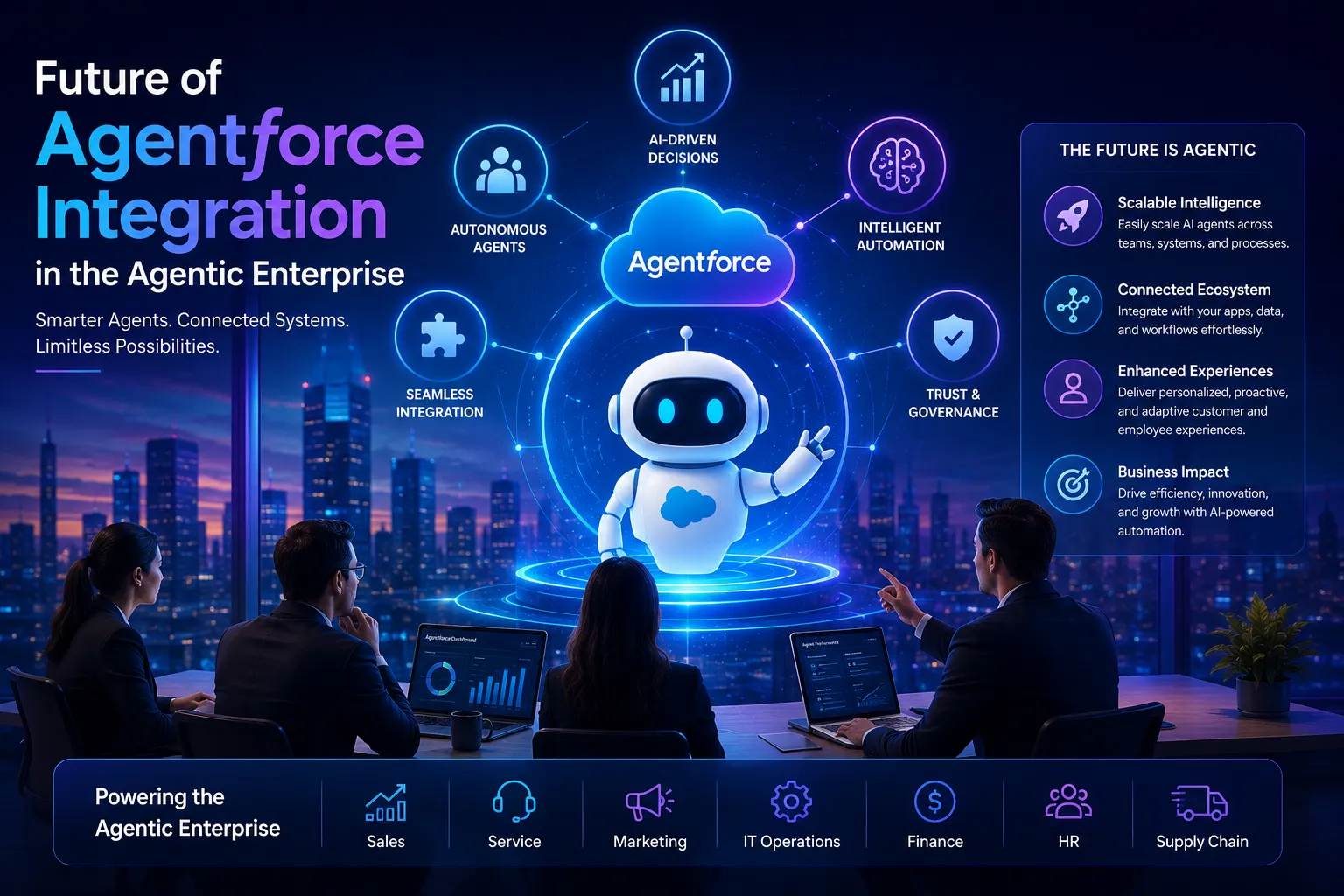
AI is no longer just making work faster. It is now adding value by making decisions, completing tasks, and operating across business functions with minimal human input. Gartner forecasts that by the year 2028, 15% of day-to-day work decisions made by businesses will be through AI agents. For most companies, that timeframe is actually closer than one may think.
For organizations leveraging Salesforce CRM, Agentforce Integration is becoming an important part of building connected and intelligent business operations. It does not simply have AI technology added to the CRM system, but it also employs smart agents that can work with real-time data, execute complicated procedures, and assist across different departments. However, technology alone does not make a successful implementation of AI in the business.
That’s what makes the Agentforce consulting partner decision crucial. This blog focuses on how Agentforce integration is shaping the agentic enterprise, why integration will define long-term success, and what organizations need to have in place before AI agents become part of how everyday work gets done.
How Agentforce Integration Is Evolving
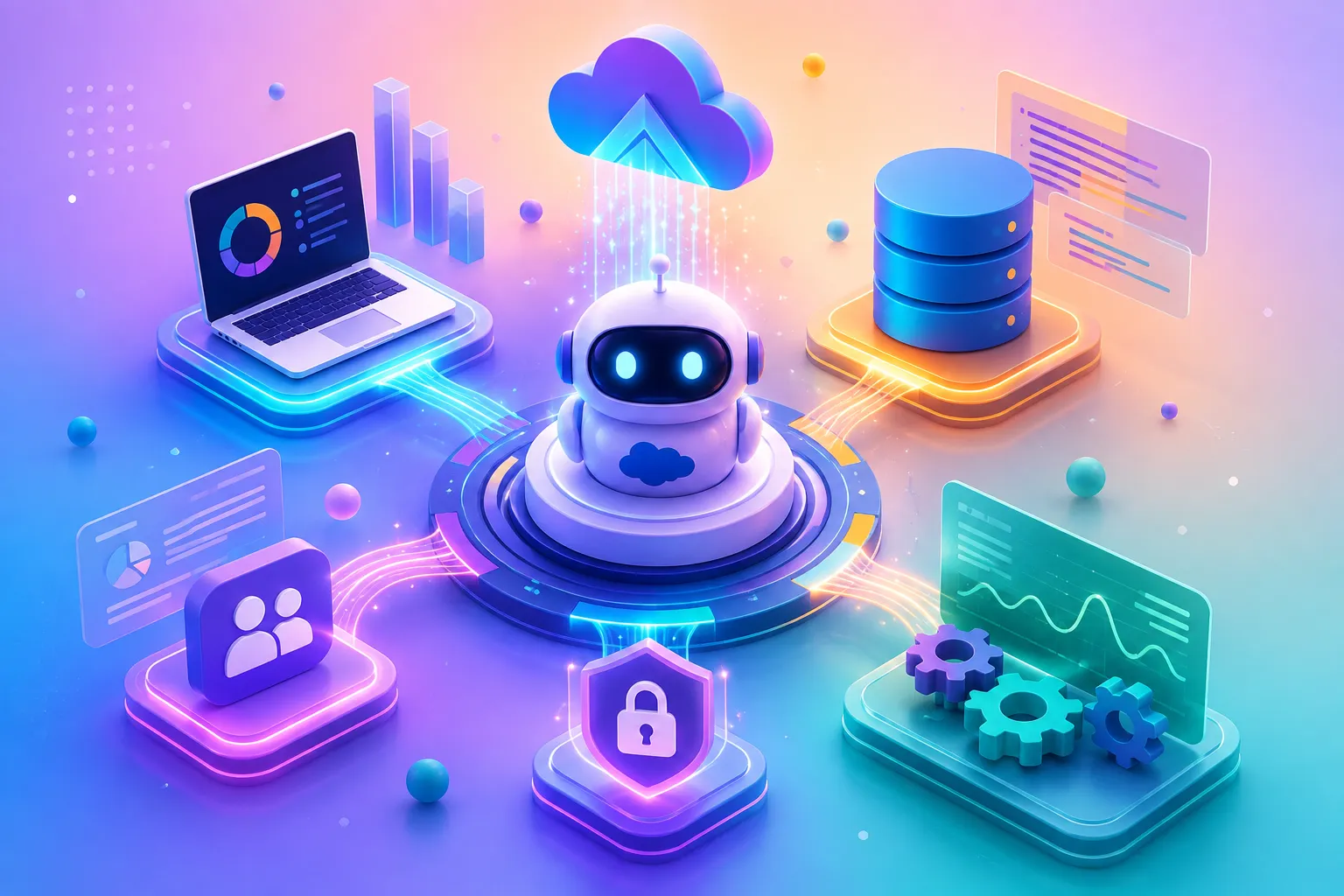
Agentforce integration is no longer just about bringing AI into Salesforce. The question now is how AI agents connect to everything else — the external systems, internal workflows, and business processes that don’t live inside the CRM but directly affect what happens there.
A single agent workflow shows why these matter. In the context of Sales, an Agentforce agent can identify a high-intent lead, review a customer’s previous activity, recommend the next step, schedule a meeting, and update the opportunity record — without a sales representative manually handling each transition.
That same model applies across customer service, marketing, and operations. But it only works when the agent has more than CRM access. It needs the right context, clean and reliable data, clearly defined permissions, and live connections to the systems involved in each workflow. Without those, the agent can’t complete the work — it can only start it.
This is why integration becomes the key challenge in creating an agentic business. With growing Agentforce adoption, the companies who will benefit the most from it will not be those who just incorporated AI into Salesforce. They’ll be the ones that built the data, systems, and governance foundation that gives agents something real to work with.
The Integration Layers Agentforce Will Depend On
An Agentforce agent is only as capable as the systems and data it can reach. Salesforce is the operational core, but most business workflows don’t begin and end there — and agents that can’t move beyond the CRM will hit a ceiling quickly.
- Data comes first: Agents make choices relying on available information. When client records are incomplete, transactional data is outdated, or vital information lies in a system that cannot be accessed by an agent; it will be reflected in the output. Clean, current, and connected data isn’t a technical preference — it determines whether an agent completes the task or makes a mistake.
- Connected business systems come next: Sales, service, finance, marketing, and operations rarely run on a single platform. When those systems can exchange information with Salesforce, an agent can follow a workflow through completion. When they can’t, the agent stops — and as a result, employees end up managing the entire workflow manually and limit the value of the automation.
- Governance is equally important: Broader access and greater autonomy require clearer boundaries. Organizations need defined permissions, security controls, and deliberate points where human judgment enters the process. An agent operating without those guardrails isn’t efficient — it’s unmanaged.
Together, these three layers determine what Salesforce Agentforce integration can realistically deliver. The businesses that invest in getting them right won’t just be automating tasks — they’ll be building the infrastructure for AI that handles meaningful work from end to end.
What the Future of Agentforce Integration Will Look Like
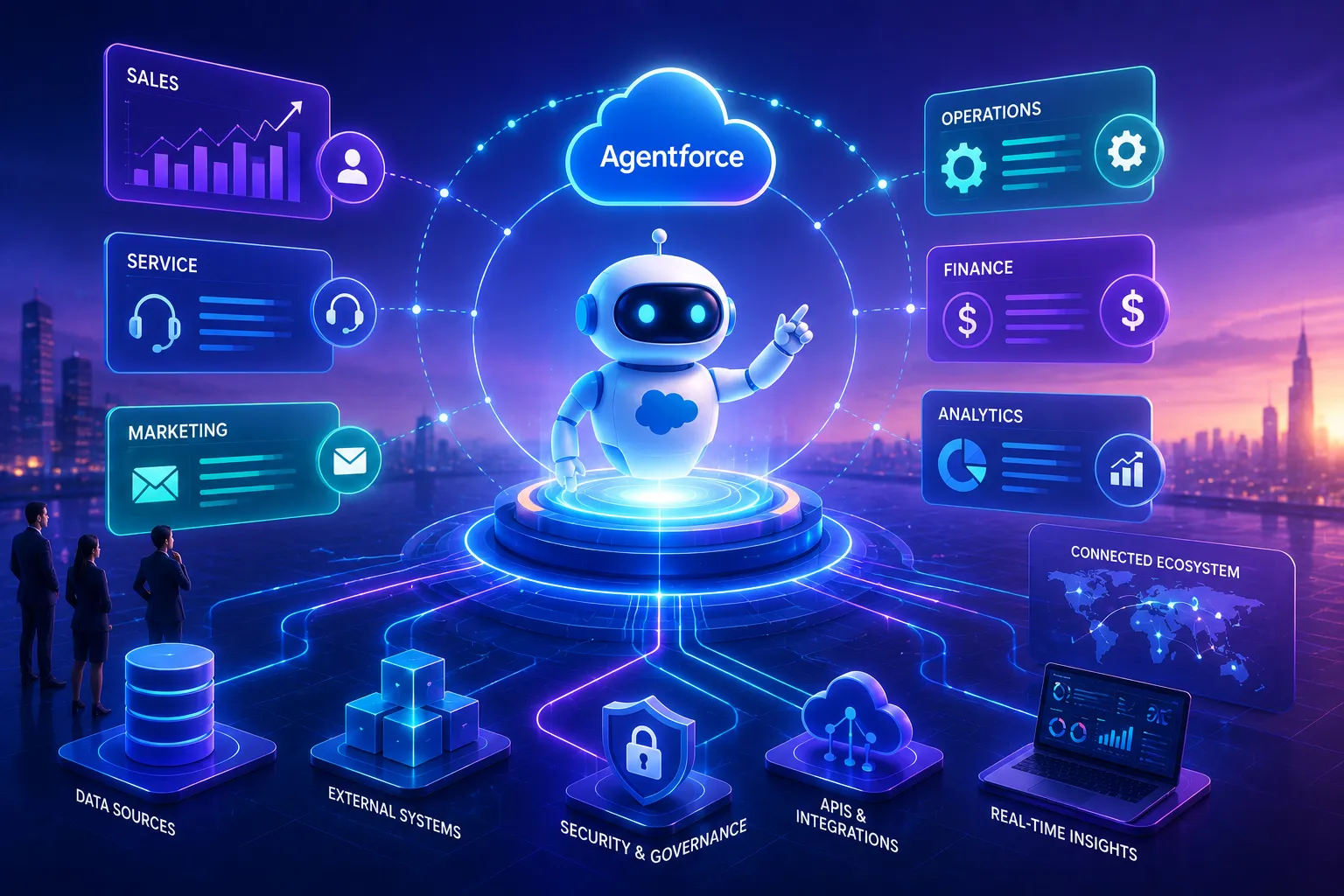
The future of Salesforce Agentforce integration will be less about adding more AI to Salesforce and more about changing how AI participates in business operations. With the advancement of technology, there is a need that will keep on expanding in the Salesforce integration services to facilitate connected workflows, improving access to other systems, as well as ensuring that infrastructure makes the agents work independently.
- Agents will work across broader business ecosystems: Instead of being limited to individual Salesforce workflows, agents will increasingly interact with finance, marketing, service, operations, and other platforms. Integration will become less about moving data between systems and more about giving agents the context required to make decisions and act.
- Multi-agent collaboration will become more important: Complex business processes may involve several specialized agents rather than one agent handling everything. One could manage customer interactions while another handles scheduling, data updates, or follow-ups. The agents can coordinate their work while employees oversee the broader outcome.
- Human roles are set to change as autonomy increases: With agents being tasked with more routine processes, human resources will be focused less on managing different processes and more on exceptions, making decisions based on priorities, and using their ability to make proper human judgments. Moreover, this development will highlight the importance of governance as it determines the areas of free agent actions and those requiring human approval.
Agentforce integration is not just about connecting different systems. The key is to create an environment where artificial intelligence agents can perform different activities across the organization, interact with each other, and accomplish valuable processes while obeying the rules.
Concluding Words
Agentforce Integration‘s future depends not just on the capabilities of its agents. It’s also linked to the infrastructure, information, integrations, and governance needed for agents to function efficiently.
As companies adopt the agentic model, Salesforce will start to play a bigger role in a larger network of interrelated functions, systems, and workflows for AI to work across. The ideal Agentforce consulting partner will create such a base and get the Salesforce ecosystem ready for AI that can achieve great business results.