MLOps vs DevOps is not a competition between two similar ideas. It is a comparison between two operating models that solve different problems. DevOps is built to improve software delivery. MLOps is built to make machine learning systems reliable after they leave the lab and enter production. The distinction matters because model-based products do not stay static – they age, drift, and react to data in ways traditional software does not.
In this blog, we explore the MLOps vs DevOps debate, focusing on their fundamental differences, emerging industry trends and more.
What DevOps is Really About?
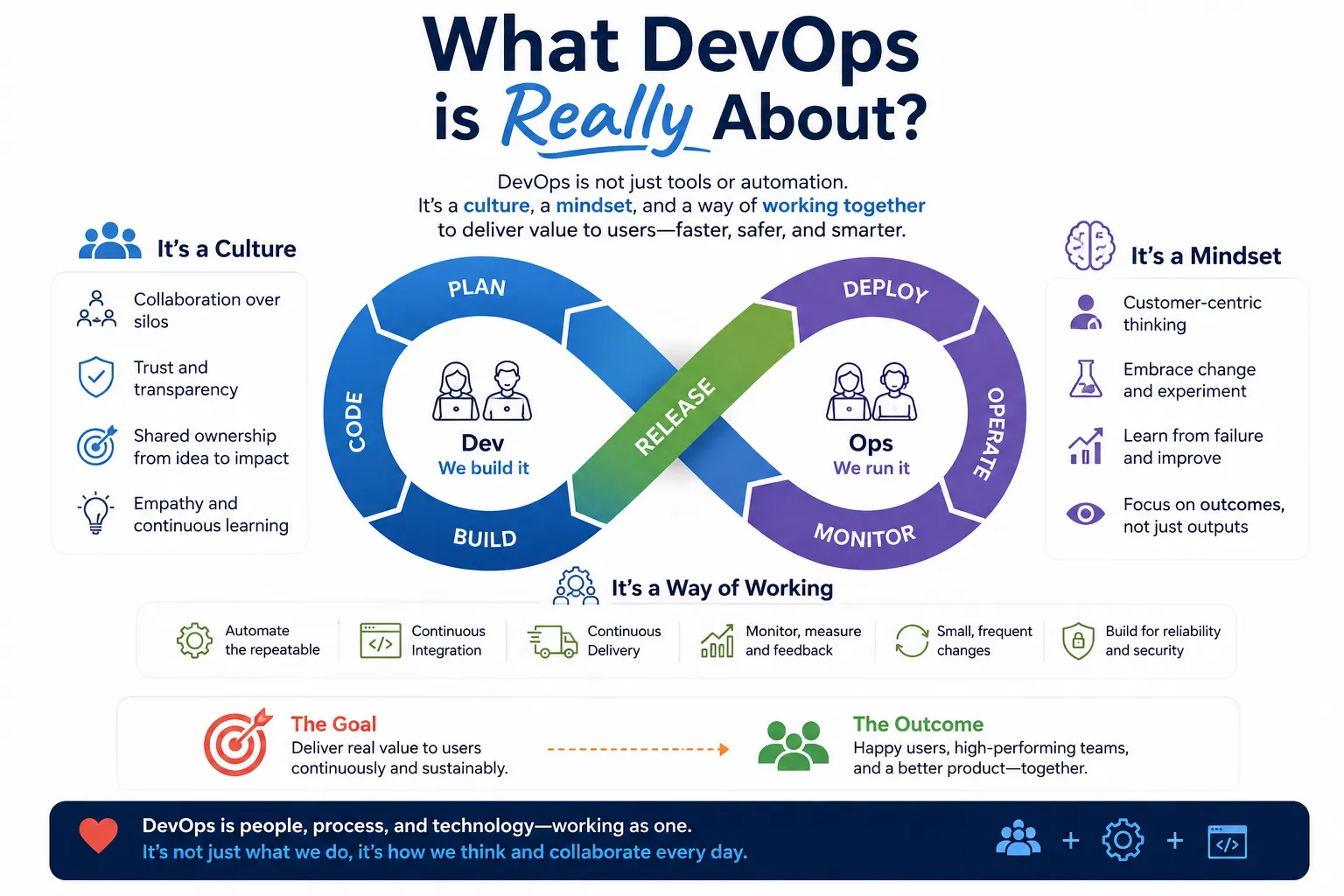
DevOps connects development and operations so teams can ship faster, reduce friction, and keep releases stable. In practice, it centers on automation, CI/CD, testing, infrastructure, observability, and recovery. The goal is straightforward – move code from commit to production with fewer handoffs and fewer surprises.
A strong DevOps setup usually includes:
- Automated builds and deployments
- Infrastructure as code
- Continuous testing
- Monitoring and incident response
- Shared ownership across engineering and operations
That is why DevOps services are still the backbone of modern software delivery. The model is mature and repeatable and works very well when the product being shipped is mostly code.
What MLOps Adds on Top?
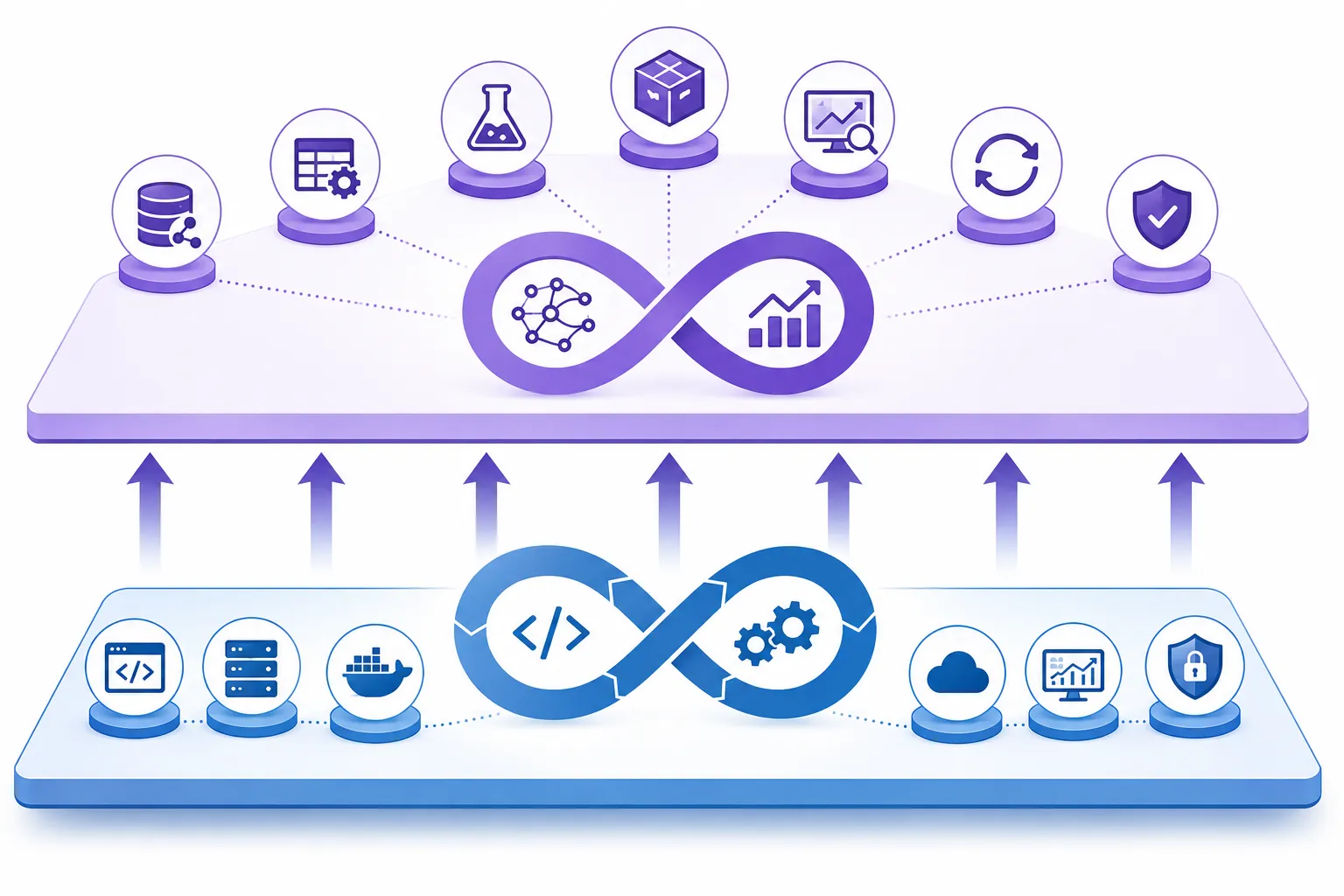
MLOps takes that delivery discipline and applies it to machine learning. But the workflow is heavier. A model depends on data quality, feature consistency, training pipelines, evaluation, approvals, serving infrastructure, and post-launch monitoring. Google’s MLOps guidance places strong emphasis on configuration, automation, data verification, testing, serving, and monitoring, with continuous training as part of the lifecycle.
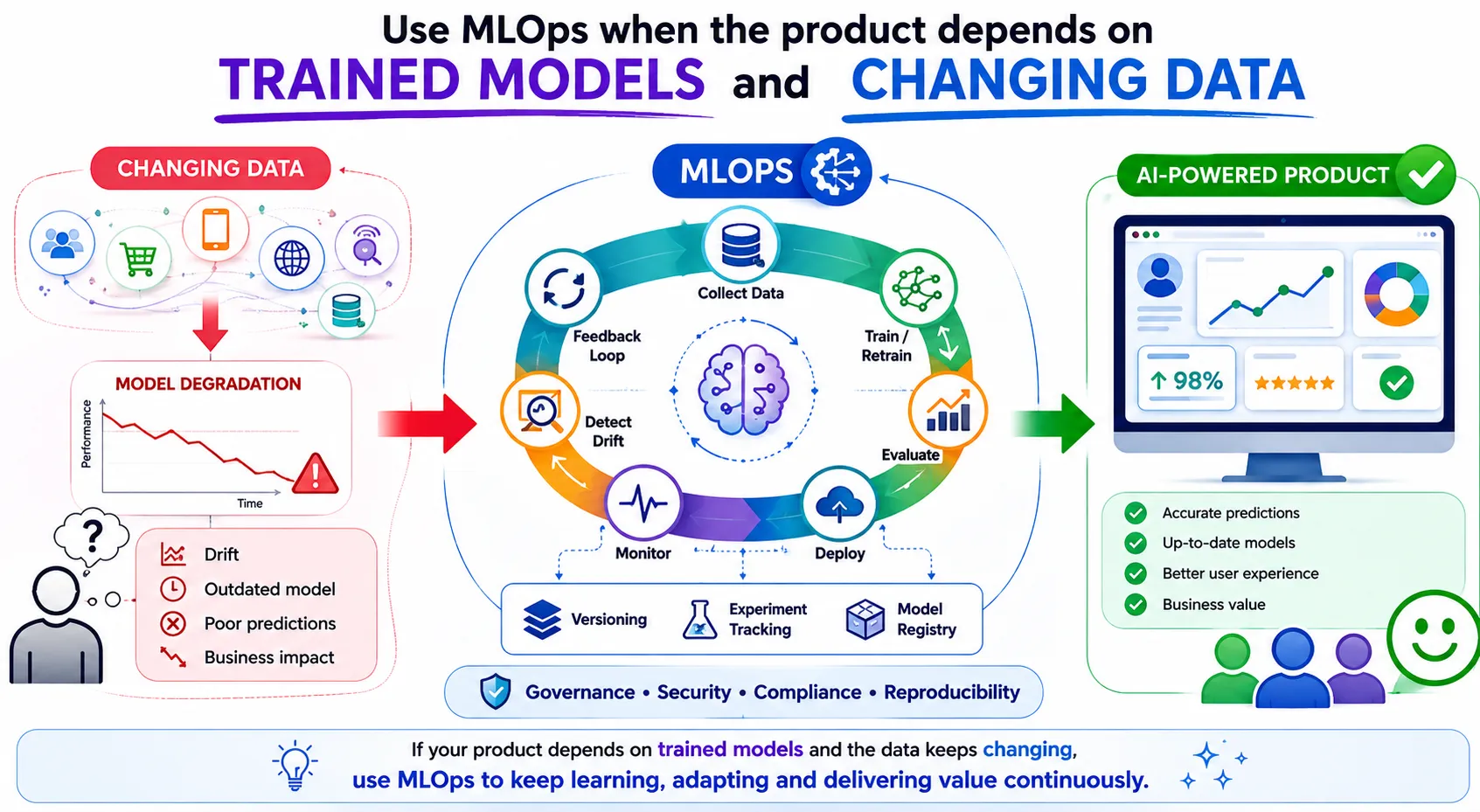
That changes the shape of the work. Success in MLOps involves more than just model deployment. It is about maintaining the model’s credibility as input data, market conditions, and user behavior start to shift. For this reason, retraining design, model versioning, drift checks, and governance controls are frequently included in MLOps services.
MLOps vs DevOps: The Practical Differences
Here is the cleanest way to separate them:
- Primary asset
- DevOps protects application code and infrastructure.
- MLOps protects code, data, features, and trained models.
- Failure pattern
- DevOps usually fails when builds break, releases regress, or services go down.
- MLOps fails when data shifts, predictions degrade, or the model becomes stale.
- Release logic
- DevOps solutions focus on shipping software updates.
- MLOps must support retraining, redeployment, reevaluation, and lifecycle control.
- Governance
- DevOps watches uptime, latency, errors, and throughput.
- MLOps watches model quality, drift, fairness, and operational stability.
MLOps vs DevOps: A Comparison Table
| Area | DevOps | MLOps |
| Primary Focus | Software delivery | Machine learning lifecycle |
| Core Asset | Application code | Data, models, and code |
| Pipeline Type | CI/CD | CI/CD/CT (Continuous Training) |
| Success Metric | System reliability and release speed | Model performance and business outcomes |
| Monitoring | Infrastructure and applications | Infrastructure, data, and models |
| Failure Cause | Software bugs or deployment issues | Data drift, model decay, or bias |
| Version Control | Code and infrastructure | Code, datasets, features, and models |
| Lifecycle Complexity | Moderate | High |
The most important distinction is that software behaves predictably once deployed. Machine learning models do not.
Their performance changes as data changes. That creates an entirely new operational layer that DevOps was never originally designed to manage.
What is Changing Right Now?
The conversation around MLOps vs DevOps has shifted because AI has changed the delivery stack itself. One major trend is platform engineering. DORA’s 2025 report says 90% of organizations have adopted at least one platform, while Google Cloud’s 2025 platform engineering research found 55% of organizations had already adopted platform engineering and 85% said developers rely on it to succeed.
That points to a clear direction – teams want a stronger internal platform layer, not just more tools.
Another key trend is the emergence of LLMOps and GenAIOps. Operational demands are rising as enterprises go beyond traditional machine learning and deploy generative AI applications at scale. Organizations must now manage:
- Prompt workflows
- Model evaluation
- Retrieval pipelines
- Governance controls
- Security policies
- Observability
- Ongoing optimization
As a result, many teams are evolving their MLOps practices into broader operational frameworks designed specifically for large language models and generative AI systems.
A third change is governance. As more teams are integrating AI features into customer-facing products, red teaming, security planning and risk review are now part of the delivery process, rather than an afterthought. A major factor why enterprise MLOps strategies now resemble operational governance programs more than simple deployment pipelines.
How to Choose the Right Approach?
The decision is not either/or.
Use DevOps when the main challenge is dependable software delivery. Use MLOps when the product depends on trained models and changing data. Organizations investing in advanced AI ML services often require both disciplines to ensure that software and AI systems operate reliably at scale. In many companies, the two now work together:
- DevOps handles the application layer.
- MLOps handles the learning layer.
- Platform engineering connects both with shared tooling, policy, and deployment standards.
Conclusion
MLOps vs DevOps is best understood as a matter of scope. DevOps industrializes software delivery. MLOps industrializes machine learning delivery. In 2026, the most effective teams are not treating AI as a side project. They are folding it into platform engineering, governance, and release discipline from day one. That is where the gap between promising prototypes and durable production systems finally closes.
Ready to bridge the gap between software delivery and AI operations? Connect with our experts today to explore tailored DevOps and MLOps solutions for your business.